
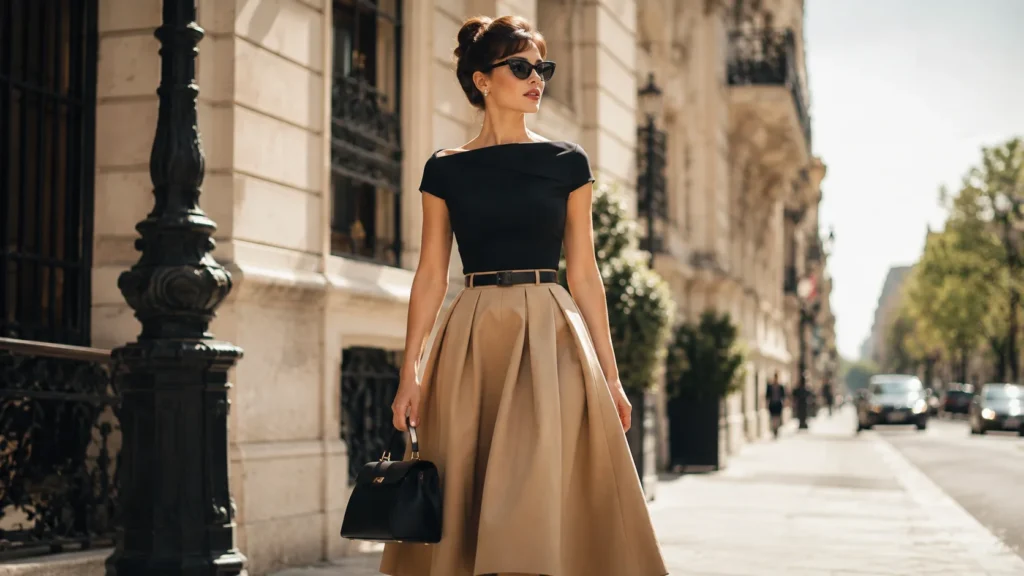
Retro chic gets thrown around constantly in fashion content, but ask five people what it actually means and you’ll likely get five different answers — some picture poodle skirts, others picture disco, others picture something closer to 1980s power dressing. That vagueness is part of why so many people who want to try the look end up either confused about where to start or worried they’ll come out the other side looking like they’re in a Halloween costume rather than genuinely well-dressed. This guide clears up exactly what retro chic style means, which eras actually shape it, and how to build the look in a way that reads as intentional and current rather than costumey.
Quick Answer: What Is Retro Chic Style?
Retro chic style is a fashion aesthetic that borrows silhouettes, prints, and design details from past decades — primarily the 1950s through 1980s — and reinterprets them with a modern fit and styling sensibility. Unlike wearing genuine vintage clothing or a literal period costume, retro chic is about referencing the past selectively: a high-waisted silhouette, a bold print, or a cat-eye accessory paired with contemporary tailoring, fabric, and proportions, so the overall look feels current rather than like a recreation of a specific decade.
What Is Retro Chic Style, Exactly?
At its core, retro chic is a curated, modernized nod to past fashion eras rather than a full recreation of any single decade’s wardrobe. The word “chic” in the name is doing real work here — it signals that the goal is polish and intentionality, not authenticity to a specific historical period down to the last detail. Someone dressed in retro chic style might wear a high-waisted A-line skirt reminiscent of the 1950s, paired with a fitted modern top and current footwear, rather than styling an entire head-to-toe period-accurate outfit.
This selectivity is what separates retro chic from both “vintage style” (which often implies wearing actual period-original garments) and “costume” (which implies full, literal recreation). Retro chic sits in between: informed by history, but filtered through modern fit, fabric, and restraint.
Retro Chic vs. Vintage vs. Old-Fashioned: What’s the Difference?
These three terms get used almost interchangeably in casual conversation, but they mean genuinely different things, and understanding the distinction is one of the most useful things you can take from this guide.
Vintage typically refers to actual clothing produced in a past era — a real 1970s dress, for example, purchased secondhand or inherited, rather than a modern reproduction. Vintage pieces can absolutely be styled in a retro chic way, but “vintage” itself describes the garment’s origin, not the styling approach.
Old-fashioned is a more negative or neutral descriptor, generally implying something reads as dated rather than intentional — the opposite of what retro chic is going for. If an outfit looks old-fashioned rather than retro chic, it usually means the modern styling element (fit, proportion, a contemporary accessory) is missing, leaving only the dated reference on its own.
Retro chic, by contrast, is specifically about the reinterpretation — taking recognizable elements from past decades and deliberately updating them so the result feels current, polished, and intentional rather than literal or dated. It can involve genuine vintage pieces, modern reproductions, or a mix of both; what defines it is the styling philosophy, not the age of the garments themselves.
The Eras That Shape Retro Chic
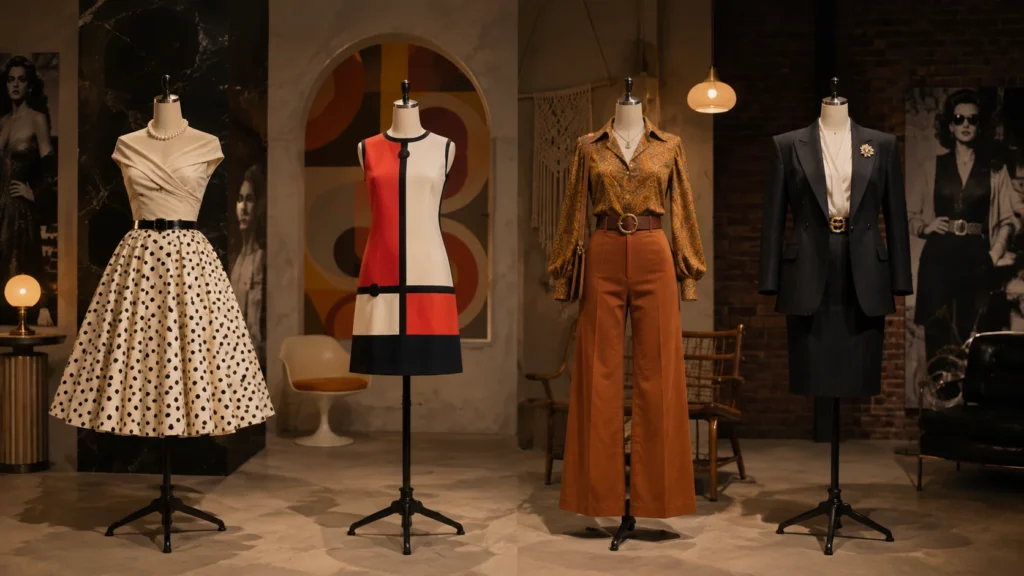
Retro chic draws most heavily from four decades, each contributing distinct, recognizable elements.
1950s Influence
The 1950s contribute some of retro chic’s most recognizable silhouettes: fitted, high-waisted skirts (often full or A-line), cinched waists, and structured tops. Polka dots, gingham, and cat-eye sunglasses are common design details borrowed from this era, and they tend to read as playful and feminine when modernized.
1960s Influence
The 1960s bring cleaner, more graphic lines — think A-line shift dresses, bold color blocking, and mod-inspired prints. This era’s influence on retro chic tends to feel more minimal and structured compared to the fuller 1950s silhouettes.
1970s Influence
The 1970s contribute flared and wide-leg silhouettes, earthy color palettes, and boho-inflected details like suede, fringe, and statement collars. This decade’s influence is often the most immediately recognizable within retro chic styling because of how distinct flared and wide-leg shapes still look against a modern wardrobe of mostly straight and slim cuts.
1980s Influence
The 1980s bring structured shoulders, bold prints, and a generally more maximalist approach to color and silhouette. In retro chic styling, 1980s references are usually used sparingly — a single structured blazer or a bold print top, for example — since a full 1980s silhouette head-to-toe tends to read as costume faster than the other eras.
Key Pieces That Define the Retro Chic Look
A handful of garment types show up again and again across retro chic styling, regardless of which specific decade is being referenced:
- High-waisted bottoms — skirts, trousers, or shorts with a high rise, which is one of the most consistently “retro-reading” silhouette choices across every decade covered above.
- A-line and fit-and-flare silhouettes — structured through the waist, flared through the skirt, a shape strongly associated with both the 1950s and elements of the 1960s.
- Statement prints — polka dots, gingham, and bold florals in particular read as retro chic rather than simply “patterned,” especially in saturated, period-appropriate colorways.
- Structured outerwear — a fitted blazer or a cropped, structured jacket, which anchors a retro-inspired outfit and prevents it from feeling like loungewear.
- Cat-eye sunglasses and structured handbags — accessories carry a disproportionate amount of the “retro” signal in an outfit, often more than the clothing itself.
How to Build a Retro Chic Outfit Step by Step
- Pick one era to lead the outfit, not several at once. Mixing a 1950s skirt with 1980s shoulders and 1970s prints in a single outfit is a common way retro chic starts to feel like a costume rather than a cohesive look.
- Choose one strong retro anchor piece. This might be a high-waisted skirt, a bold print top, or structured sunglasses — pick the piece that will carry the era reference, rather than trying to make every item “retro.”
- Pair it with modern basics. A well-fitted modern top, current denim, or contemporary footwear balances the retro anchor piece and keeps the overall look grounded in the present.
- Check proportions against your actual body, not the original era’s typical fit. Vintage sizing and fit conventions often differ from modern ones; adjusting proportions (tailoring a vintage piece, or choosing a modern reproduction cut for your body) matters more than sourcing something period-exact.
- Add one, maybe two, retro-specific accessories. Cat-eye sunglasses, a structured handbag, or a specific jewelry style can reinforce the era reference without requiring more clothing changes.
- Step back and assess: does this feel like an outfit, or a costume? If every single element loudly references the same decade, dial one or two pieces back toward something more neutral.
Retro Chic Hair, Makeup, and Accessories
Hair and makeup can reinforce a retro chic look without requiring any additional clothing changes, which makes them a low-effort, high-impact styling tool. A defined red lip and winged eyeliner are strongly associated with 1950s and 1960s retro references, while soft waves or a simple, sleek low ponytail can nod to the era without requiring elaborate styling. As with clothing, restraint matters — a full period-accurate hairstyle paired with equally period-accurate makeup and clothing all at once is where the look most often tips over into costume territory.
Accessories deserve particular attention because they’re often the fastest, most affordable way to build retro chic style without committing to full outfit changes: a structured handbag, cat-eye sunglasses, a scarf tied at the neck, or vintage-style jewelry can transform a basic modern outfit into something that reads clearly as retro chic.
How to Modernize Retro Chic (So It Doesn’t Read as Costume)
This is arguably the single most important skill in retro chic styling, and it comes down to three practical levers: fit, quantity, and pairing.
Fit matters more than almost anything else. A period-accurate silhouette in a fit that flatters your actual body today will read as intentional and current; the same silhouette in a boxy or ill-fitting cut is far more likely to read as dated or costumey, regardless of how “authentic” the piece is.
Quantity is the second lever — limiting how many retro-specific elements appear in one outfit at once. One statement piece plus modern basics reads as styled; five statement pieces from the same era all at once reads as a themed outfit rather than everyday style.
Pairing is the third lever — deliberately combining retro elements with clearly modern ones (a current denim cut, contemporary sneakers, a minimalist modern bag) so the outfit reads as “now, with a nod to then” rather than “then, exactly.”
Common Mistakes to Avoid
Trying to recreate an entire decade in one outfit. This is the single fastest way to cross from retro chic into costume territory — restraint and selective referencing are what make the look work.
Ignoring fit in favor of “authenticity.” A period-accurate piece that doesn’t actually fit well will undermine the entire look; modern tailoring or alteration is often necessary even when working with genuine vintage pieces.
Overlooking accessories as an easy entry point. Many people assume retro chic requires an entirely new wardrobe, when accessories alone — sunglasses, a handbag, jewelry — can shift a basic modern outfit toward the aesthetic with minimal investment.
Assuming retro chic means expensive vintage shopping. While genuine vintage pieces are one path in, plenty of modern retailers produce well-made, retro-inspired reproductions at a range of price points, making the look accessible without necessarily requiring vintage sourcing.

Expert Tips for Building the Look on Any Budget
- Start with one inexpensive, high-impact accessory (cat-eye sunglasses or a structured bag) before investing in full retro-styled clothing pieces, to test whether the aesthetic genuinely fits your everyday style.
- If thrifting for genuine vintage pieces, budget for basic alterations, since sizing conventions and fit have changed enough over decades that a great vintage find often still needs tailoring.
- Look for modern reproduction pieces explicitly marketed as “retro-inspired” or “vintage-inspired” rather than genuine vintage if you want the look without the fit and care challenges that can come with older garments.
- Photograph your outfit before leaving the house and review it critically for balance — this is often the fastest way to catch when an outfit has tipped from “styled” into “themed.”
Frequently Asked Questions
What decade is retro chic style based on? Retro chic isn’t tied to a single decade; it most commonly draws from the 1950s through 1980s, selectively borrowing silhouettes, prints, and accessories from these eras rather than fully replicating any one of them.
Is retro chic the same as vintage style? Not exactly. “Vintage” refers to clothing actually produced in a past era, while retro chic describes a styling approach that references past decades using either genuine vintage pieces, modern reproductions, or a mix of both.
How do I keep retro chic from looking like a costume? Focus on fit, limit the number of era-specific elements in one outfit, and pair retro pieces with clearly modern basics — these three adjustments are what most reliably separate a styled look from a themed one.
Can I do retro chic style on a budget? Yes. Accessories like sunglasses, handbags, and jewelry are often the most affordable, highest-impact way to build the look, and many modern retailers produce retro-inspired reproduction clothing at accessible price points.
Do I need genuine vintage clothing for retro chic style? No. While genuine vintage pieces are one path into the aesthetic, modern retro-inspired reproductions are widely available and often easier to fit and care for than original vintage garments.
What’s the difference between retro chic and old-fashioned? Old-fashioned generally implies something reads as dated, while retro chic implies a deliberate, modernized reference to the past. The difference usually comes down to whether a modern styling element (fit, pairing, restraint) is present.
Are there specific colors associated with retro chic? Color associations shift by era — 1950s and 1960s references often lean toward bold primary colors and pastels, while 1970s references lean toward earthy, warm tones. There isn’t one single “retro chic” color palette; it depends on which era is being referenced.
Can retro chic style work for a professional or office setting? Yes, particularly when drawing on more structured eras like the 1960s — a clean shift dress silhouette or a tailored blazer with subtle retro details can work well in business casual settings, more so than looks referencing the more casual, boho 1970s aesthetic.
How many retro pieces should be in one outfit? As a general guideline, one strong anchor piece plus one or two supporting accessories tends to read as intentional; stacking multiple loud, era-specific pieces at once is a common way outfits tip into costume territory.
Is retro chic style still popular, or has it faded? Aesthetic trends shift over time, and specific decade references cycle in and out of prominence, but the broader retro chic approach — referencing past eras with modern styling — has remained a consistent thread in fashion rather than a single passing trend.
Final Takeaway
Retro chic style works best when it’s treated as a reference point, not a rulebook — pick one era, choose a strong anchor piece, pair it with modern basics, and pay close attention to fit. That combination of restraint and intentional styling is what separates a genuinely chic, current outfit from something that reads as a literal costume. If you’re just getting started, the lowest-risk entry point is a single accessory — sunglasses, a handbag, or a piece of jewelry — added to an outfit you already wear, before investing further in the aesthetic.

At Decor Artly, we bring art, home decor, and personal style together to create beautiful spaces and inspiring lifestyles. Led by Design Director Roni, we offer curated artwork, elegant home accents, and personalized styling to help you express your unique taste.