
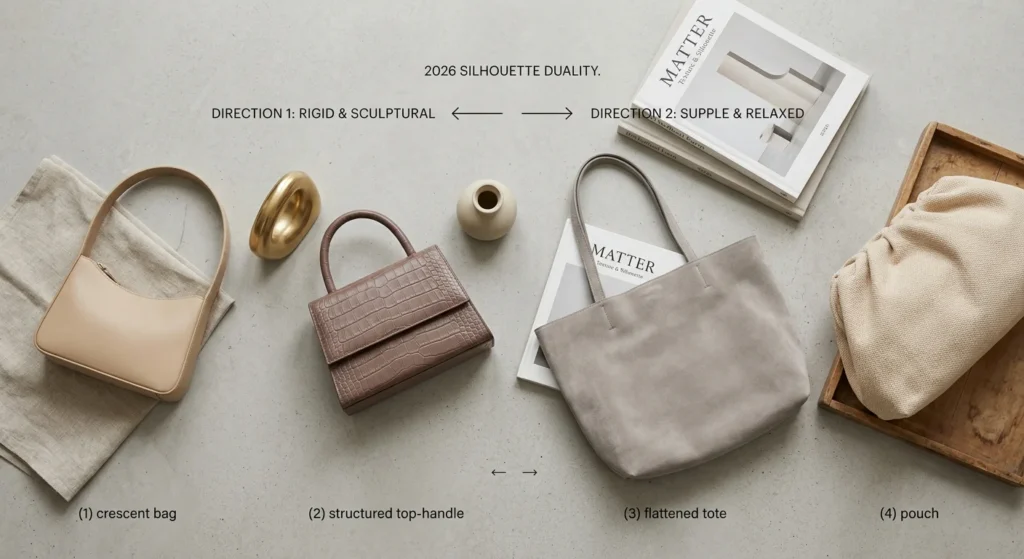
Handbag trends used to move in one direction at a time. 2026 is different. Walk through any department store or scroll through resort and fall runway coverage and two opposite instincts are both winning: crisp, structured shapes with real posture, and soft, slouchy silhouettes that move with the body. Neither one is a passing microtrend. Both are showing up season after season, across price points, from independent labels to the biggest luxury houses.
If you are trying to figure out what to actually buy this year, that split matters more than any single “it bag.” This guide breaks down the handbag silhouettes defining 2026, explains what separates a genuine shift from a fleeting fad, and gives you a practical way to decide which shape fits your own wardrobe rather than someone else’s Fashion Week street-style photo.
Quick Answer: What’s Trending in 2026?
The handbag silhouettes defining 2026 split into two camps: soft, curved shapes like the crescent bag, slouchy hobo, and relaxed pouch on one side, and structured, upright shapes like the top-handle doctor’s bag, bowler satchel, and frame bag on the other. Flattened totes and wide east-west totes bridge the two. Color is trending toward warm neutrals, cognac, and burgundy, while embellishment (fringe, beads, chain) is showing up on otherwise classic shapes rather than replacing them.
What “Silhouette” Means When You’re Shopping for a Handbag
In handbag terms, silhouette refers to the overall outline and structure of the bag, independent of brand, logo, or material. Two bags can be made from the same leather and still read completely differently because one has a rigid frame and boxy corners while the other slumps and curves. Silhouette is what determines how a bag sits against your body, how it photographs, and how it ages visually over a few seasons of wear.
This distinction matters because trend cycles in handbags rarely retire a whole category (totes are not “over,” shoulder bags are not “over”). What actually shifts, year to year, is which silhouette within each category feels current. A tote can look dated in a boxy, stiff cut and look completely current in a flattened, elongated cut. That is a silhouette shift, not a category shift, and it is the layer most buying guides skip past.
The Big Shift in 2026: Two Directions at Once
For several seasons leading into 2025, the dominant story in handbags was quiet, minimal, and rigid: sharp corners, restrained hardware, small proportions. 2026 pulls in two directions from that baseline simultaneously, and both directions are being worn by the same consumer in different contexts rather than one replacing the other.
The first direction is softness. Crescent and hobo shapes, slouchy totes, and relaxed pouches are dominating resale data and sell-through at multiple price points. These bags are defined by curved, unstructured lines, supple leather that drapes rather than holds its shape, and minimal hardware. The appeal is comfort and a lived-in look that reads less “new purchase” and more “already part of your life.”
The second direction is structure, and it is showing up hardest in bags meant to be carried by hand rather than slung on the shoulder. Structured satchels, compact top-handles, and doctor’s-bag-inspired frames are appearing across houses that otherwise have very different aesthetics, from Prada and Miu Miu to Ferragamo and Proenza Schouler. These shapes have firm corners, visible hardware, and a deliberate posture. They read as more dressed-up and more considered than a bag you just grab on your way out the door.
A third, quieter thread runs underneath both: bags getting more personal. Charms, appendage mini-bags, fringe, beading, and other embellishment are being added to otherwise simple, classic shapes rather than replacing them. The base silhouette stays timeless; the decoration is what signals “2026” instead of an entirely new bag shape.
2026 vs. the Recent Past: How the Silhouette Story Changed
It helps to see where 2026 sits relative to what came just before it. Around 2023 and 2024, handbag trends were dominated by micro and mini bags: tiny shoulder bags and top-handles that prioritized a sculptural look over actual storage. By 2025, that had cooled into a “quiet luxury” phase built on restrained, minimal shapes with almost no hardware or decoration, where the whole point was a bag that did not shout.
2026 breaks from both of those in a specific way. Size has normalized: the pendulum has swung back toward bags that hold a laptop and the actual contents of a day, rather than a phone and a card case. And rather than settling on one dominant mood the way the micro-bag era or the quiet-luxury era did, the category split into the two parallel directions covered in this guide. That is a meaningful shift for anyone shopping by trend, because it means there is no single “right” silhouette to chase this year, only a right silhouette for the gap in your own rotation.
This also explains why so many of the shapes below are revivals rather than inventions. The crescent bag, the doctor’s bag, and the bowler all had earlier moments in fashion history. Their 2026 versions are not new ideas; they are familiar shapes rebuilt in softer leathers, updated proportions, and a more current color palette, which is a large part of why they read as fresh rather than nostalgic costume pieces.
7 Handbag Silhouettes Defining 2026
Below are the seven silhouettes showing up most consistently across runway coverage, resale data, and retail assortments this year. Each one can work as a standalone answer if you are only trying to identify a specific shape.
1. The Crescent (Half-Moon) Bag
The crescent bag is a curved, half-moon-shaped silhouette that sits naturally under the arm or across the body. It typically comes in supple leathers like nappa or lambskin that let the shape drape rather than hold a rigid line, with minimal hardware and clean finishes. First popular in the late 1990s and early 2000s, it has returned with a more understated, less logo-driven construction than its earlier version.
This shape works well as an everyday bag because the curve naturally follows the body instead of poking out at the corners, and it tends to be more spacious inside than its compact outer shape suggests. It is one of the clearest examples of the “soft” direction in 2026’s split.
Because the crescent bag has no rigid frame, the same silhouette can look noticeably different from one brand to the next depending on how deep the curve is cut and how soft the leather is. A shallow curve in a firmer leather reads closer to a traditional shoulder bag, while a deep curve in a very soft skin reads closer to a hobo. Trying a few versions in person is worth it before buying, since the difference between “flattering” and “shapeless” often comes down to that curve depth.
2. The Flattened, Sleek Tote
This is a tote stripped of bulk: a flattened, elongated silhouette rather than the traditional boxy carryall. Satin and smooth leather versions have been especially visible, and shrunken proportions are outperforming larger ones. The appeal is that it keeps the practicality of a tote (open top, room for essentials) while looking noticeably more current than a stiff, structured version of the same category.
It works particularly well layered over a simple outfit, since the flat profile does not compete with tailoring or add visual bulk the way an oversized tote can.
3. The Wide East-West Tote
East-west simply means the bag is oriented horizontally rather than vertically. The 2026 version leans long and low rather than tall, with elongated proportions that make even a simple outfit look considered. Despite the sleek, elongated look, most versions remain genuinely practical, sitting comfortably under the arm rather than swinging awkwardly.
This silhouette bridges the structured and soft camps: it can be built with a firm base and soft sides, giving it more polish than a slouchy bag while staying more relaxed than a rigid satchel.
4. The Pouch Bag
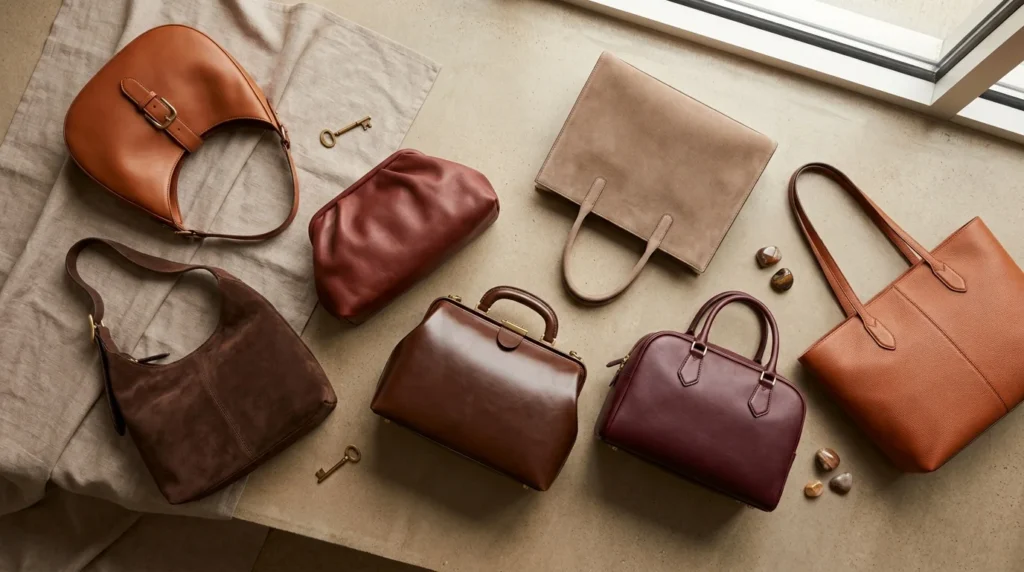
The pouch is a relaxed, scrunched shape without a rigid frame, often carried by hand, tucked under the arm, or worn with a short strap or wristlet. It reads as the casual, cool-girl alternative to a structured shoulder bag, and versions from major houses have leaned into an intentionally undone, slightly rumpled look rather than a clean, polished one.
Because it lacks internal structure, a pouch bag tends to be more forgiving to carry half-full and half-empty than a boxy bag, which can look oddly deflated when it is not fully packed.
5. The Structured Top-Handle and Doctor’s Bag
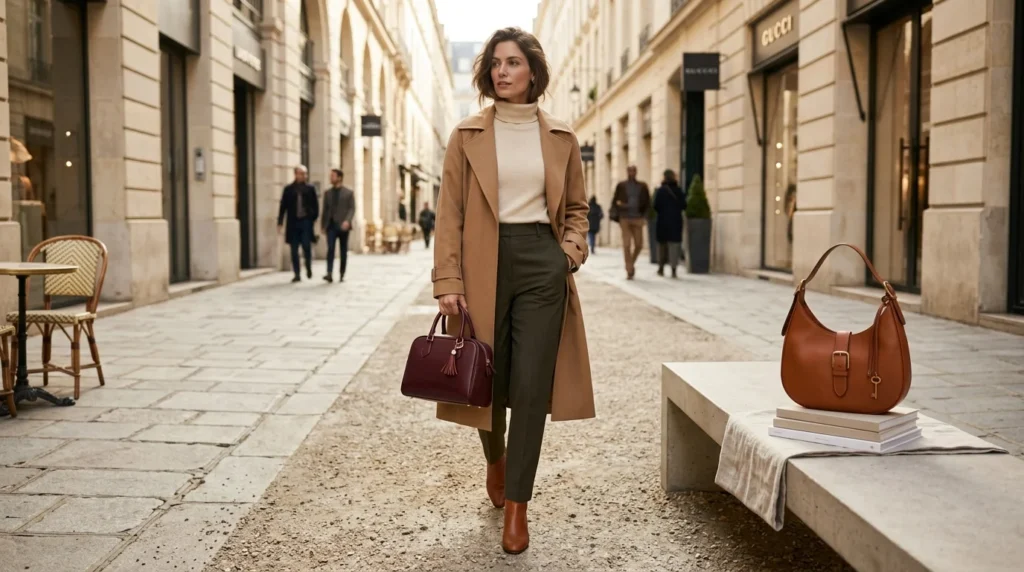
This is the clearest expression of 2026’s “structure” direction: an upright, firm-shaped bag with a confident top handle, often echoing the classic doctor’s bag silhouette with its rounded top opening and stable base. Unlike a soft hobo or pouch, this shape holds its form whether it is full or nearly empty, and it is designed to be carried low in the hand rather than slung over the shoulder.
It has become a wardrobe anchor for tailored, “put-together” looks, since the firm silhouette pairs naturally with structured coats and clean-lined outfits the way a slouchy bag typically does not.
One trade-off worth knowing before buying: because the shape holds its form regardless of how full it is, a structured top-handle can look slightly stiff or overly formal with very casual outfits, like denim and sneakers, in a way a soft hobo would not. It tends to earn its keep fastest in a wardrobe that already includes some tailoring, rather than as a first bag for an entirely casual rotation.
6. The Bowler and Frame Satchel
The bowler and frame satchel are close cousins of the top-handle trend, built around trapezoidal bodies, double straps, and visible frame hardware, frequently in gold tone. These bags carry the same dressed-up, structured energy as the doctor’s bag but with a slightly more architectural silhouette, wider at the base and often finished with a rounded top handle plus an optional shoulder strap for versatility.
This shape tends to suit anyone who wants one bag that can move between an office setting and evening plans without changing silhouettes, since the structure reads as polished in both contexts.
7. Embellished Classics
Rather than introducing brand-new shapes, several 2026 collections are adding tassels, beads, fringe, and chain detailing to already-familiar silhouettes: a classic quilted flap, a simple shoulder bag, a basic tote. The underlying silhouette stays timeless and recognizable; the embellishment is what signals the current season.
This matters for buyers because it means a well-made classic shape does not become “dated” the way a genuinely novel silhouette can. If you already own a well-constructed bag in a familiar shape, a removable charm, scarf, or strap accessory can achieve a similar refreshed look without buying an entirely new bag.
How to Choose the Right Silhouette for Your Body and Lifestyle
With two competing directions both trending at once, the more useful question is not “which 2026 handbag silhouettes” but “which silhouette fits how you actually move through your day.” A few practical starting points:
- If you carry a laptop, tablet, or files daily, prioritize structured top-handles, frame satchels, or a flattened tote over a pouch or crescent bag, since rigid shapes protect flat items better than soft, unstructured ones.
- If you want one bag to carry from a desk to dinner, look at the bowler/frame satchel silhouette; the shoulder-strap-plus-handle combination adapts more easily across settings than a hand-only pouch or clutch.
- If you are petite or prefer a lower-maintenance carry, a smaller crescent or shrunken flattened tote sits closer to the body and avoids the swing of a larger east-west shape.
- If your wardrobe already leans tailored and structured, a soft hobo or pouch can be a useful contrast piece rather than a redundant one, since it softens an otherwise crisp outfit.
- If your wardrobe is already relaxed and casual, a structured top-handle can do the opposite: add polish without requiring you to change your clothes.
The underlying principle is contrast and function first, trend label second. A silhouette that photographs well on a runway model carrying nothing is not always the same silhouette that works carrying your actual daily items.
Colors and Materials Shaping 2026 Silhouettes
Color and material choices interact with silhouette more than most trend coverage acknowledges. The 2026 palette centers on warm, wearable neutrals: cognac, chocolate brown, taupe, deep grey, and burgundy, all of which transition across seasons more easily than trend-driven brights.
Material affects how that color actually reads. A cognac or burgundy tone looks noticeably richer in full-grain leather, where dye settles into natural grain texture, than in a flat synthetic finish, where the same color looks uniform and comparatively flat. The same base color also reads differently depending on the silhouette it is applied to: a chocolate brown slouchy hobo comes across as warm and casual, while the identical shade on a structured frame bag reads more like a boardroom piece.
Texture is doing a lot of the season’s visual work beyond color. Suede, woven leather, pebbled grain, and croc-embossed finishes are all more visible in 2026 collections than in the smoother, flatter finishes that dominated the previous minimal-leaning cycle. Smooth leather has not disappeared, but the bags getting the most attention tend to invite a second look because of texture, not just shape.
Woven and basket-weave leather deserves a specific mention because it is doing double duty this year, showing up in both structured top-handles and relaxed totes. It reads as warm-weather appropriate in lighter neutrals and works equally well through cooler months in darker tones, which makes it one of the more genuinely season-spanning material choices in the current trend cycle rather than a strictly spring or fall statement.
Practical Examples: Matching Silhouette to Occasion
Office and workwear: A structured top-handle or frame satchel in cognac or black leather holds its shape sitting on a desk and pairs naturally with tailoring, doing more visual work for a plain outfit than a soft bag would.
Weekend and errands: A slouchy crescent or hobo in a neutral suede handles being tossed in and out of a car, is more forgiving of a half-packed load, and does not show creasing the way a structured bag can.
Evening out: The bag shrinks for evenings, typically down to a compact crossbody, small pouch, or clutch, which keeps the silhouette clean when a coat or tailored outfit is already doing most of the visual work.
Travel and daily carry: The wide east-west tote or a flattened tote in a larger size covers laptop-and-life carrying needs while still reading as more current than a boxy, traditional carryall.
A useful shortcut for building a small, versatile rotation: pick one structured piece and one soft piece in a shared neutral color family (for example, cognac or burgundy), rather than several trend pieces in unrelated colors that only work with one outfit each.
Common Mistakes When Buying a “Trendy” Bag
Buying the silhouette instead of the function. A gorgeous pouch bag that cannot hold a wallet, phone, and keys without stretching out of shape will get worn a handful of times and then sit in a closet. Check what you actually carry before committing to an unstructured shape.
Assuming trendy means temporary. Several of 2026’s leading silhouettes, including the crescent bag and the doctor’s bag, are revivals of shapes that have cycled through fashion before and have real staying power in a well-made version. A well-constructed piece in one of these shapes is a reasonable investment, not just a seasonal purchase.
Ignoring how a color performs on a given material. A trend color chosen in the wrong finish (a flat synthetic instead of full-grain leather, for instance) can look noticeably less premium than the same shade would in a better material, even at a similar price point.
Buying oversized “just because it’s in.” Oversized bags photograph well but are not universally practical; a bag that overwhelms a smaller frame or constantly needs to be set down because it is unwieldy is a mismatch regardless of how current the silhouette is.
Chasing every silhouette at once. Because 2026 has two active directions (structured and soft), it is tempting to buy one of each new shape as it appears. A more useful approach is choosing one or two silhouettes that solve a real gap in your current rotation.
Expert Tips for Buying Bags That Outlast the Trend Cycle
Prioritize construction over embellishment. Fringe, beading, and charms can be added or removed relatively easily; a poorly constructed base bag cannot be fixed the same way. If budget is limited, spend it on the base silhouette and add embellishment separately if you want it.
Choose one versatile color over several trend colors. A cognac, black, or burgundy bag in a well-chosen silhouette will pair with more of an existing wardrobe than a seasonal color that only works with one or two outfits.
Test the silhouette with your actual daily items, not an empty display bag. A structured bag that looks sharp on a shelf can look and feel very different once it is holding a phone, wallet, keys, and whatever else goes in it daily.
Separate “statement” purchases from “workhorse” purchases mentally before shopping. A bold, embellished piece can be a lower-cost, less-worn statement item, while a core silhouette in a neutral tone is worth the higher spend since it will get more consistent use.
Store and care for structured bags properly. Firm-framed silhouettes like the doctor’s bag and bowler hold their shape better long-term when stuffed lightly for storage and kept away from direct heat, which prevents the leather from creasing or the frame from warping.
Frequently Asked Questions
What handbag silhouettes are trending in 2026?
The crescent bag, slouchy hobo, relaxed pouch, flattened tote, wide east-west tote, structured top-handle/doctor’s bag, and bowler/frame satchel are the silhouettes showing up most consistently across 2026 runway coverage and retail assortments, alongside classic shapes updated with fringe, beading, or charm embellishment.
Are crescent bags still in style in 2026?
Yes. The crescent, or half-moon, bag is one of the defining soft silhouettes of 2026, appearing across both heritage houses and independent labels in supple leathers with minimal hardware.
What is a doctor’s bag?
A doctor’s bag is a structured, upright handbag with a rounded top opening, a stable base, and a confident top handle, historically modeled on the bags carried by traveling physicians. Its 2026 version keeps the firm silhouette but in softer, more modern leathers and finishes.
What is the most flattering handbag shape?
There is no single universally flattering shape; it depends on body proportions and what you carry. As a general guide, smaller frames often suit crescent or shrunken flattened totes that sit close to the body, while larger frames can carry oversized east-west totes or structured satchels without being overwhelmed by them.
Are structured or slouchy bags more in style right now?
Both. 2026 is unusual in that structured shapes (top-handles, bowlers, frame satchels) and soft shapes (crescent bags, hobos, pouches) are trending simultaneously rather than one replacing the other, so the more useful question is which one fits your daily needs.
What handbag colors are trending in 2026?
Warm neutrals lead the palette: cognac, chocolate brown, taupe, deep grey, and burgundy. These tones are being chosen for versatility across seasons rather than as a single dominant trend shade.
Is the east-west tote still relevant?
Yes, the east-west orientation remains a strong trend into 2026, now leaning toward longer, lower proportions rather than the shorter horizontal totes seen in prior seasons.
How do I know if a bag shape will still look good next year?
Look at whether the silhouette is a genuine revival of a classic shape (crescent, doctor’s bag, bowler) versus a highly specific, one-season novelty shape. Revivals of established silhouettes tend to have longer staying power than shapes built around a single viral detail.
What size handbag is most practical for daily use?
A size that comfortably holds a phone, wallet, keys, and one additional item (glasses case, small tech pouch) without stretching an unstructured bag out of shape or leaving a structured bag looking overly empty. This varies by individual, but it is a more reliable test than shopping by trend size alone.
Do I need a different bag for work versus evenings out?
Not necessarily one bag per occasion, but a structured top-handle or frame satchel tends to suit work and daytime settings, while the same wardrobe benefits from one smaller, easier-to-carry option (a compact crossbody, pouch, or clutch) for evenings.
Final Takeaway
2026 does not hand shoppers one single “it bag” to chase. Instead, it offers two clear directions, structured and soft, plus a scattering of familiar shapes refreshed with texture and detail. The most useful way to shop this year is to identify which direction is actually missing from your current bag rotation, choose a silhouette within that direction in a versatile, well-made material, and let embellishment or color be the smaller, lower-stakes decision layered on top. A well-chosen crescent bag or structured top-handle bought this year is unlikely to feel dated next year, because both are grounded in shapes with real staying power rather than a single season’s novelty.
At Decor Artly, we bring art, home decor, and personal style together to create beautiful spaces and inspiring lifestyles. Led by Design Director Roni, we offer curated artwork, elegant home accents, and personalized styling to help you express your unique taste.