
Abstract art has a way of transforming a room that representational art often can’t quite match — a bold, colorful canvas becomes the anchor of a space rather than just a decoration on the wall. But choosing the right piece is genuinely harder than it looks: sizing, style, originality, and price all interact in ways that aren’t obvious until you’re standing in front of a blank wall trying to decide. This guide walks through what actually defines the style, how to choose a piece that fits your space and taste, and what separates an affordable print from a genuinely valuable original.
Quick Answer: How to Choose the Right Piece for Your Space
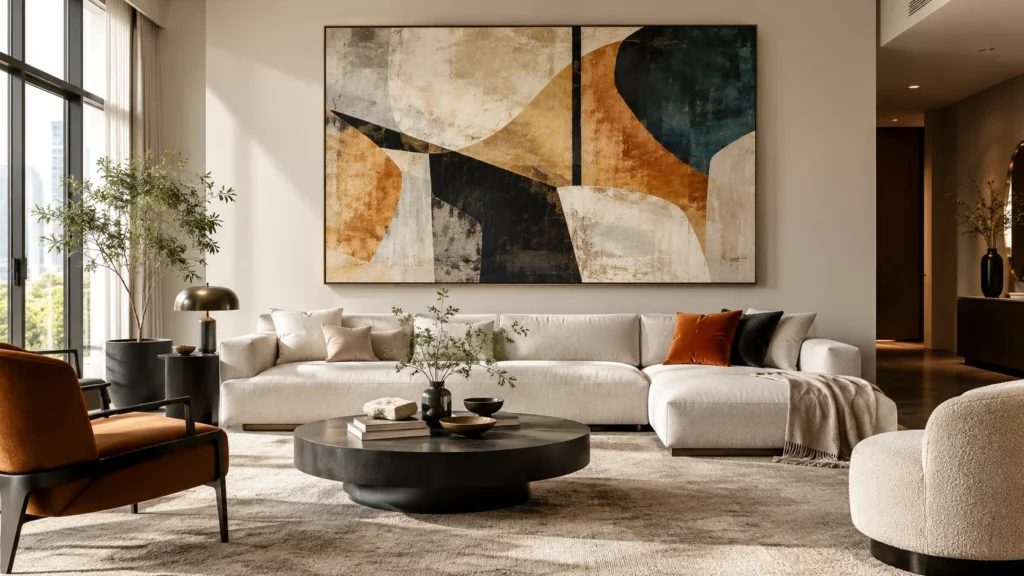
The right piece comes down to three factors working together: size relative to your wall and furniture, a color palette that either complements or intentionally contrasts your existing decor, and whether you want an original, one-of-a-kind piece or a more affordable reproduction. As a general starting point, a piece should cover roughly two-thirds to three-quarters of the width of the furniture it’s hung above, and neutral or muted palettes tend to be the most versatile choice for anyone unsure about committing to a bold color statement.
What Makes an Artwork “Abstract”?
At its core, abstract art doesn’t attempt to represent objects, people, or scenes in a realistic or recognizable way. Instead, it uses color, shape, line, form, and texture as the subject itself, rather than as tools to depict something else. This is the key distinction that separates the style from representational art (which depicts recognizable subjects, even if stylized) and from purely decorative pattern work (which is typically more repetitive and less expressive in intent).
Within this broad category, there’s enormous range — a piece can be entirely non-representational, built from pure color fields and geometric shapes, or it can be loosely inspired by a real subject (a landscape, a figure) while distorting or simplifying it so far that the original reference becomes secondary to the composition itself. Both approaches fall under the same general style umbrella, which is part of why “abstract” can feel like such a broad, sometimes confusing category to shop within.
Modern Abstract Art vs. Traditional Abstract Styles
“Modern” in this context generally refers to contemporary interpretations of the style — cleaner lines, more minimal color palettes, and compositions designed with current interior design trends in mind, rather than referencing a specific historical art movement. Traditional abstract styles, by contrast, often draw more directly from mid-20th-century movements like abstract expressionism, characterized by bolder gestural brushwork, more saturated color, and a rawer, less polished visual language.
Neither approach is objectively better — the distinction matters mainly for matching a piece to your existing decor. A more traditional, expressive abstract piece can work beautifully as a bold focal point in an otherwise minimal room, while a cleaner, more modern abstract piece tends to blend more seamlessly into a broader range of interior styles without demanding as much visual attention.
Original Artwork vs. Prints: What’s the Real Difference
This is one of the most consequential decisions in buying abstract art, and it’s worth understanding clearly before you shop. Original artwork refers to a single, one-of-a-kind piece created directly by the artist — no two originals are identical, even within a related series. Prints (including giclée prints and limited-edition reproductions) are reproductions of an original piece, produced in multiples, and are generally significantly more affordable as a result.
Neither option is inherently “better” — the right choice depends on your priorities. If uniqueness and long-term value are important to you, an original is the more meaningful investment, since its value is tied to its singularity and the artist’s broader body of work. If you want a striking, high-quality piece at a more accessible price point, a well-produced print from a reputable source can offer excellent visual impact without the cost of an original.
A practical tip: check for clear documentation of what you’re buying before purchasing. Reputable sellers will explicitly state whether a piece is an original, a limited-edition print (often signed and numbered), or an open-edition reproduction — and that distinction should be reflected clearly in the price.
How to Choose Modern Wall Art for Your Space
Choosing modern wall art for a specific room comes down to a few practical, repeatable steps rather than pure instinct:
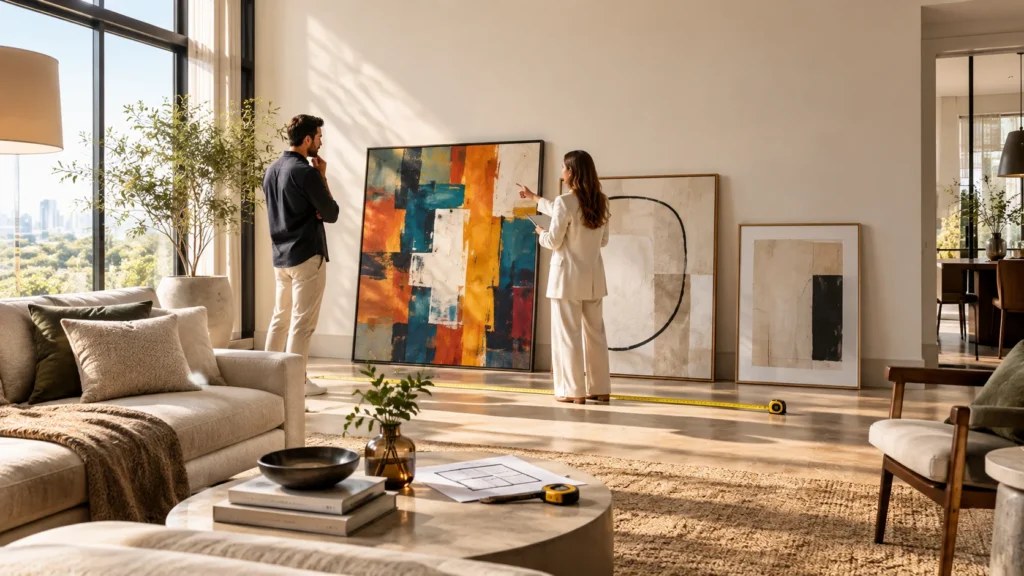
- Measure the wall and the furniture beneath it. A piece hung above a sofa or console table should generally span roughly two-thirds to three-quarters of that furniture’s width for balanced proportions.
- Consider the room’s existing color palette. Decide whether you want the piece to complement your current colors or serve as an intentional, contrasting focal point.
- Think about viewing distance. A piece in a large, open living room can handle bolder color and more intricate detail than a piece in a small hallway that’s viewed up close.
- Decide on single statement piece vs. a gallery arrangement. One large piece creates a clean focal point, while a grouped arrangement of smaller pieces can add visual interest to a larger, otherwise empty wall.
Large Abstract Art: When and Where It Works Best
Large abstract art works particularly well as a singular focal point in open, high-ceilinged spaces — above a sofa, a bed headboard, or a dining table — where a smaller piece would otherwise feel visually lost. As a general guideline, a large-format piece tends to work best when there’s enough surrounding negative space for it to breathe; crowding a large piece with too many other wall elements nearby can undercut its impact as a statement piece.
Neutral Abstract Art for a Calm, Cohesive Look
Neutral abstract art — pieces built around muted tones like beige, taupe, soft grey, and off-white, sometimes with subtle warm or cool undertones — tends to be the most versatile choice for anyone furnishing a space gradually or unsure about committing to a bold color statement. Because neutral palettes read as calm and cohesive rather than demanding attention, they also tend to age well stylistically, remaining relevant even as other decor trends shift around them.
Textured Abstract Art: Why Texture Changes Everything
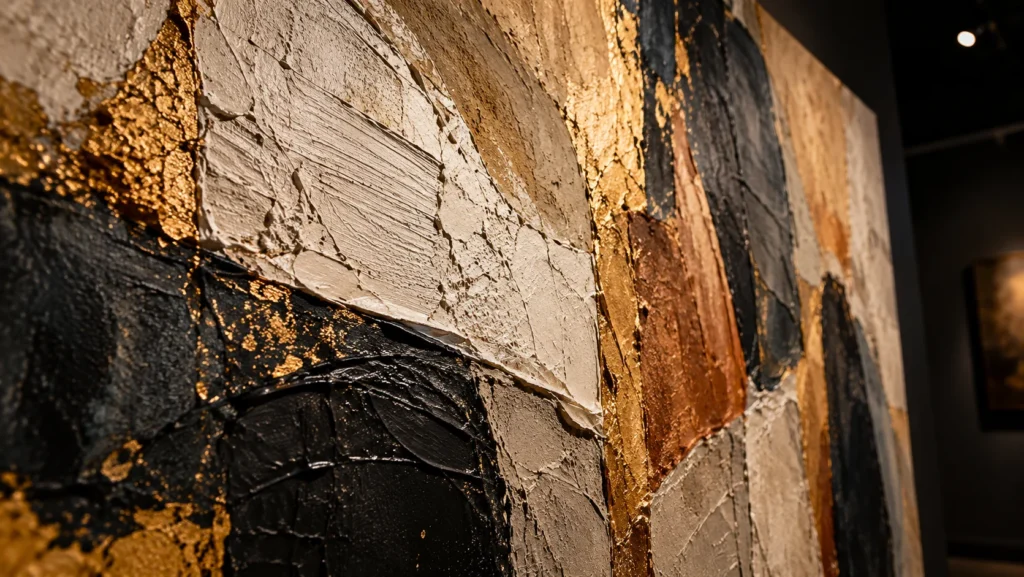
Textured abstract art incorporates raised, dimensional surface elements — often through techniques like impasto (thickly applied paint that retains visible brushstroke or palette-knife marks), layered mixed media, or added materials like sand, plaster, or fabric. This texture does real visual work: it catches and shifts with changing light throughout the day, giving the piece a different character in morning versus evening light, which is something a flat print simply can’t replicate. If you’re choosing between two similar compositions, texture is often the detail that makes one feel noticeably more dynamic and alive in person than in a photo.
What Makes Abstract Art “Luxury”?
Several factors typically drive a piece into luxury pricing territory: the artist’s reputation and market history, the piece’s originality (a one-of-a-kind original versus a reproduction), the materials and scale involved, and provenance (a piece’s documented ownership and exhibition history). It’s worth understanding that “luxury” in this context isn’t purely about visual complexity — a relatively minimal, clean abstract composition by an established artist can command a significantly higher price than a more elaborate piece by an unknown one, because value here is tied heavily to the artist’s standing and the work’s authenticity rather than to how much visual detail is present.
For buyers newer to collecting, a practical approach is to research the specific artist’s background and prior sales history before treating a “luxury” label at face value, since pricing in this category can vary enormously based on factors that aren’t always obvious from the piece alone.
Common Mistakes to Avoid When Buying
Choosing a piece based purely on the photo without checking actual dimensions. Abstract pieces in particular can photograph misleadingly — a composition that looks huge and dramatic in a product photo may be much smaller in person, and vice versa, so always confirm exact measurements before buying.
Assuming all “abstract” art will match any interior style. While the category is broad, specific pieces still have a distinct color and tonal character; a bold, saturated piece won’t necessarily suit a minimal, neutral-toned room without some intentional styling around it.
Not clarifying whether a piece is original or a print before purchasing. This is one of the most common sources of buyer disappointment — always confirm this explicitly, since it directly affects both price and long-term value.
Underestimating scale for large walls. A common mistake is choosing a piece that’s technically “large” in absolute terms but still visually small relative to an oversized wall, leaving the space feeling unbalanced or unfinished.
Expert Tips for Choosing a Piece You’ll Love Long-Term
- Live with a smaller or more neutral piece for a while if you’re unsure about committing to a bold, statement-making composition — you can always add a bolder piece elsewhere once you’re confident in your space’s overall direction.
- When shopping online, request or check for a scale reference image (the piece shown next to furniture or a person) rather than relying on a cropped, zoomed-in product photo alone.
- If texture matters to you, look specifically for close-up detail photos showing brushstroke or surface dimension, since texture is very difficult to judge from a standard flat product image.
- For an original piece, ask directly about the artist’s background, medium, and any available documentation or certificate of authenticity before finalizing a purchase, particularly for higher-priced pieces.
Frequently Asked Questions
What defines abstract art? Abstract art uses color, shape, line, and texture as its subject rather than depicting realistic or recognizable objects and scenes, distinguishing it from representational art styles.
Is abstract art the same as modern art? Not exactly. “Modern” generally refers to contemporary stylistic interpretations, while “abstract” refers to the non-representational approach itself; a piece can be both modern and abstract, or traditional and abstract, since the two terms describe different things — era/style versus visual approach.
What’s the difference between original artwork and a print? An original is a single, one-of-a-kind piece made directly by the artist, while a print is a reproduction, often produced in multiples. Originals are typically more valuable and expensive due to their uniqueness; prints offer a more affordable way to own a similar visual style.
How do I choose the right size for large abstract art? As a general guideline, a piece hung above furniture should span roughly two-thirds to three-quarters of that furniture’s width, and it’s worth measuring your actual wall space rather than judging size from a product photo alone.
What makes neutral abstract art a good choice for beginners? Neutral palettes tend to be versatile and easier to style around existing decor, making them a lower-risk starting point for anyone new to buying abstract art or unsure about committing to a bold color choice.
Why does textured abstract art often cost more? Textured pieces typically require more labor-intensive techniques and materials (like impasto application or mixed media) than flat, single-layer compositions, which can contribute to a higher price alongside other value factors like originality and artist reputation.
What makes abstract art “luxury” priced? Luxury pricing is typically driven by the artist’s market reputation, the piece’s originality, scale, materials, and documented provenance — not simply by how visually complex or large the piece is.
Can abstract art work in a small room? Yes, though scale and viewing distance matter — a smaller, more minimal composition or a single well-proportioned piece generally works better in a compact space than an oversized, highly detailed one.
How do I know if an abstract piece will match my existing decor? Consider whether you want the piece to complement your current color palette or serve as an intentional contrast; requesting or creating a simple mockup of the piece on your actual wall (many sellers offer this) can help avoid guesswork.
Is it worth buying original artwork instead of a print? It depends on your priorities — originals offer uniqueness and potential long-term value tied to the artist’s reputation, while prints offer strong visual impact at a more accessible price point. Neither choice is objectively better; it comes down to what you’re prioritizing.
Final Takeaway
Choosing the right abstract art comes down to being deliberate about three things: size relative to your actual space, a color palette that fits your intended mood, and clarity about whether you’re buying an original or a reproduction. Whether you’re drawn to a bold, textured statement piece or a calm, neutral composition, taking the time to measure your wall and confirm exactly what you’re purchasing will do more for your satisfaction with the piece than any single style decision alone.

At Decor Artly, we bring art, home decor, and personal style together to create beautiful spaces and inspiring lifestyles. Led by Design Director Roni, we offer curated artwork, elegant home accents, and personalized styling to help you express your unique taste.