

Yellow has a reputation problem in the nail world — it’s often described as “hard to pull off,” and more than a few people have tried it once, ended up with a streaky, uneven, slightly sickly-looking manicure, and sworn off the color entirely. That’s a shame, because the right yellow, chosen and applied correctly, can be one of the most striking, genuinely versatile colors in your nail polish rotation. This guide breaks down the real range of yellow nail polish shades, how to pick one that actually suits you, and how to apply it so it looks intentional rather than accidental.
Quick Answer: Is Yellow Nail Polish Hard to Pull Off?
Yellow nail polish has a reputation for being difficult, but it’s less about the color itself and more about two specific factors: shade selection relative to your skin’s undertone, and application technique, since yellow pigments are notoriously prone to streaking compared to darker colors. Choosing a shade that complements your undertone (warm yellows for warm undertones, cooler lemon or pastel yellows for cool undertones) and using a proper base coat with thin, even layers solves most of the common complaints people have about wearing yellow on their nails.
Why Yellow Has a Reputation for Being Tricky
There are two genuinely separate reasons yellow gets singled out as a difficult nail color, and understanding both makes the whole category much less intimidating.
The first is pigmentation. Yellow pigments in nail polish formulas are typically more translucent and less densely pigmented than darker colors like red or navy, which means yellow polish often requires more coats to reach full, even opacity — and more coats means more opportunity for streaking, dragging, or uneven buildup if application isn’t careful.
The second is skin-tone interaction. Because yellow sits directly opposite from the cool, pink-based tones many people associate with “flattering” nail colors, an ill-matched yellow can genuinely clash with certain undertones in a way that’s more noticeable than a similar mismatch would be with, say, a red or a berry shade. This is a real, legitimate consideration — but it’s a solvable one with the right shade selection, not a reason to avoid yellow altogether.
The Main Shades and What They’re Called
“Yellow” nail polish actually spans a genuinely wide range of distinct sub-shades, each with a different personality:
- Mustard yellow — a deep, muted, slightly brownish yellow, closer to an autumnal tone than a bright, cheerful one. Reads as sophisticated and works well in fall and winter contexts.
- Butter yellow — a soft, warm, creamy pale yellow, gentle enough to feel almost neutral. A popular entry point for people nervous about trying yellow for the first time.
- Pastel yellow — a light, slightly cooler-toned yellow, often with a chalky or muted quality. Works well for soft, romantic, or spring-inspired looks.
- Lemon yellow — a bright, clean, true yellow with cooler undertones than mustard or butter. Bold and eye-catching without tipping into full neon territory.
- Neon yellow — an extremely bright, highly saturated, fluorescent yellow. The boldest option in the category, typically reserved for statement looks or specific seasonal trends like bright summer manicures.
Knowing these names specifically is genuinely useful when shopping or requesting a color at a salon, since “yellow nail polish” alone covers an enormous range, and the difference between mustard and neon yellow is essentially the difference between two entirely different manicures.
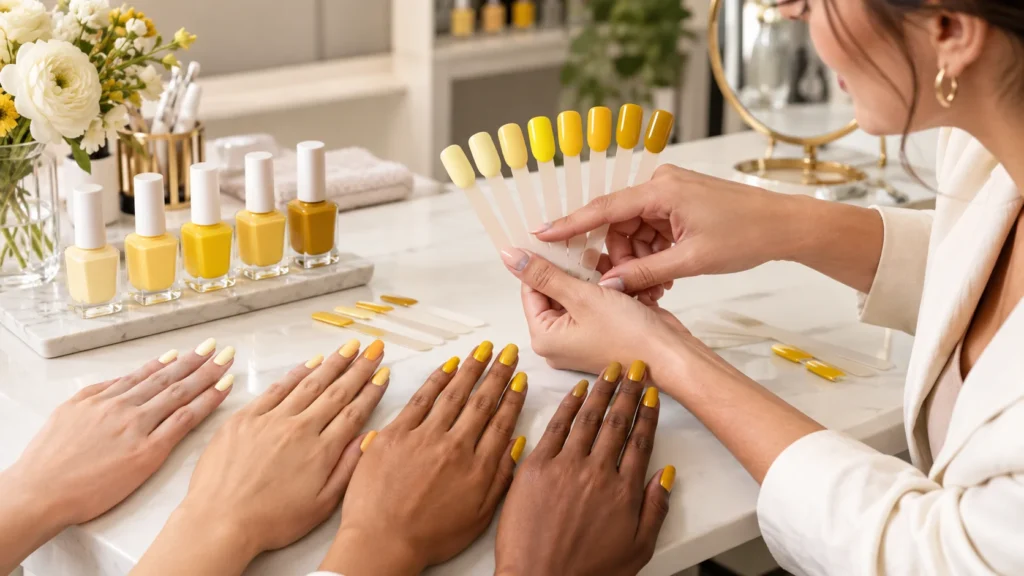
Nail Polish Yellow Colors: Best Shades for Every Skin Tone
Matching a specific yellow sub-shade to your skin’s undertone is the single most effective way to solve the “yellow doesn’t suit me” concern.
Warm undertones (skin with golden, peachy, or olive undertones) generally pair well with warmer yellows — mustard and butter yellow in particular tend to look cohesive and intentional against warm skin, since they share similar undertones rather than fighting against them.
Cool undertones (skin with pink, red, or bluish undertones) generally do better with cooler-leaning yellows — a true lemon yellow or a cooler pastel yellow tends to create a more flattering contrast than a heavily warm-toned mustard, which can occasionally look slightly muddy against cooler skin.
Neutral undertones have the most flexibility here and can generally wear the full range successfully, from soft butter yellow to bold neon, since there’s no strong undertone clash to account for either direction.
It’s worth noting this is a general guideline, not a strict rule — personal preference and how a specific shade makes you feel matter too, and plenty of people successfully wear “technically mismatched” yellows simply because they love how the color looks and feels on them regardless of undertone theory.
Finish Matters: Matte, Glossy, Sheer, and Neon
Beyond the base shade itself, finish significantly changes how a yellow reads on the nail.
A glossy finish tends to make yellow look more vibrant and polished, reflecting light in a way that reads as intentional and put-together — generally the safer, more universally flattering choice for most yellow shades. A matte finish mutes the color slightly and can give mustard or pastel yellows a more sophisticated, less “loud” quality, which some people prefer for everyday wear. Sheer or jelly-finish yellows offer a translucent, subtle wash of color rather than full opacity, which can be a gentler way to experiment with yellow without committing to a bold, opaque look. Neon finishes are the most intense version of the color category and tend to work best as a deliberate statement choice rather than an everyday default.
How to Apply Yellow Polish So It Doesn’t Streak
Since streaking is the most commonly cited frustration with yellow nail polish specifically, a slightly different application approach than usual tends to produce noticeably better results.
- Start with a proper base coat. This isn’t optional with yellow the way it might feel with darker colors — a good base coat helps the pigment adhere more evenly and reduces the number of full coats needed.
- Apply thin coats, not thick ones. It’s tempting to apply yellow polish thickly to reach opacity faster, but thick coats are exactly what causes streaking and uneven drying with this color specifically. Two to three thin coats generally produce a cleaner result than one or two thick ones.
- Let each coat dry fully before the next. Rushing between coats is one of the most common causes of dragging and streak lines, and this matters more with yellow’s typically thinner formula than with more heavily pigmented colors.
- Consider a white or pale base for true opacity. For very bright or neon yellows in particular, a thin layer of white polish underneath can help the yellow reach full, even saturation with fewer total coats.
- Finish with a glossy top coat. Beyond adding shine, a good top coat helps smooth out any minor texture inconsistencies from the yellow layers underneath, giving the overall manicure a more polished finish.
Pairing Yellow Nails with Outfits and Occasions
Yellow’s formality range is genuinely wide, which is part of what makes it such a versatile color once you’ve found the right shade for you. Mustard yellow pairs naturally with fall and winter wardrobes — deep greens, browns, and warm neutrals — and can read as sophisticated enough for the office in a matte finish. Butter and pastel yellows work well for spring occasions, brunches, and soft, romantic outfit pairings. Lemon and neon yellows shine in summer contexts, pairing well with bright, playful outfits and beachwear, and tend to feel most at home in casual, high-energy settings rather than formal ones.
Common Mistakes to Avoid
Choosing a shade based only on the bottle color, not the undertone match. A yellow that looks great in the bottle can look noticeably different against your specific skin tone — swatching on an actual nail (even briefly) before committing to a full manicure helps avoid this.
Applying thick coats to rush opacity. As covered above, this is the single most common cause of the streaking yellow is known for — patience with thin layers produces a far better result.
Skipping the base coat specifically because it “seems unnecessary.” Yellow benefits more from a proper base coat than most other colors, precisely because of its typically thinner, more translucent pigmentation.
Assuming all yellows are equally bold. Treating mustard, butter, pastel, and neon yellow as interchangeable is a common mistake — they read completely differently in terms of both boldness and formality, so it’s worth being specific about which sub-shade you actually want before shopping or booking a salon appointment.

Expert Tips for Choosing and Wearing Yellow Confidently
- If you’re nervous about trying yellow for the first time, start with butter yellow rather than a bold lemon or neon shade — it’s the most universally flattering and forgiving entry point into the color category.
- Test a shade against your bare nail in natural daylight before committing, since artificial lighting (especially in stores or salons) can distort how warm or cool a yellow actually reads.
- If you love a specific yellow but find it clashes slightly with your undertone, try it as an accent nail or in nail art rather than a full manicure — this lets you enjoy the color without it dominating the overall look.
- Keep a dedicated base coat specifically for lighter, more translucent polishes like yellow, since some formulas are better suited than others to helping thin pigments achieve full opacity.
Frequently Asked Questions
What is the most flattering yellow nail polish shade?
There’s no single universally flattering shade, but butter yellow tends to be the most broadly wearable option since its soft, warm tone works reasonably well across a range of undertones, making it a good starting point if you’re unsure.
Why does my yellow nail polish look streaky?
Streaking with yellow is usually caused by applying coats too thickly or not letting each coat dry fully before the next — yellow’s typically thinner pigmentation makes it more prone to this than darker colors, so thin, patient layers over a proper base coat generally solve the issue.
Does yellow nail polish suit pale skin?
Yes, particularly cooler-leaning yellows like lemon or pastel yellow, which tend to create a flattering contrast against paler skin without the potential muddiness that a very warm mustard shade can sometimes produce.
Does yellow nail polish suit darker skin tones?
Yes — warm, rich yellows like mustard and butter tend to look particularly striking against deeper, warmer skin tones, creating a cohesive, complementary look.
What’s the difference between mustard and lemon yellow nail polish?
Mustard yellow is a deeper, more muted, brownish-toned yellow, while lemon yellow is brighter, cleaner, and cooler-toned. They read very differently — mustard leans sophisticated and autumnal, while lemon leans bold and vibrant.
Is yellow nail polish still trendy?
Yellow tends to cycle in and out of prominence seasonally rather than being a permanent year-round trend, with different sub-shades (like butter yellow) gaining particular popularity in recent seasons — checking current seasonal trend coverage will give the most up-to-date picture.
Can I wear yellow nail polish to work?
Yes, particularly in a matte or muted finish like mustard yellow, which tends to read as more sophisticated and professional than a bright neon or glossy lemon shade.
Do I need a special base coat for yellow polish?
Not a specialized formula specifically, but using any quality base coat matters more with yellow than with darker, more opaque colors, since it helps the thinner pigment adhere evenly and reduces the number of coats needed.
What finish looks best with yellow nail polish?
Glossy finishes tend to make yellow look vibrant and polished, while matte finishes mute the color for a more subtle, sophisticated look — the “best” choice depends on how bold or understated you want the final result to be.
How many coats of yellow nail polish do I need?
Most yellow polishes require two to three thin coats to reach full, even opacity, sometimes more for very sheer or neon formulas — applying coats too thickly to speed this up is what typically causes streaking.
Final Takeaway
Yellow’s reputation as a difficult nail color comes down to two very solvable factors: picking a shade that actually complements your undertone, and applying it patiently in thin layers over a proper base coat. Once those two pieces are in place, yellow becomes one of the most versatile colors available — capable of reading as sophisticated in a muted mustard matte finish or as a bold summer statement in glossy neon lemon. If you’re trying it for the first time, start with a soft butter yellow and a careful, thin-coat application before working your way toward bolder shades.

At Decor Artly, we bring art, home decor, and personal style together to create beautiful spaces and inspiring lifestyles. Led by Design Director Roni, we offer curated artwork, elegant home accents, and personalized styling to help you express your unique taste.