
Introduction
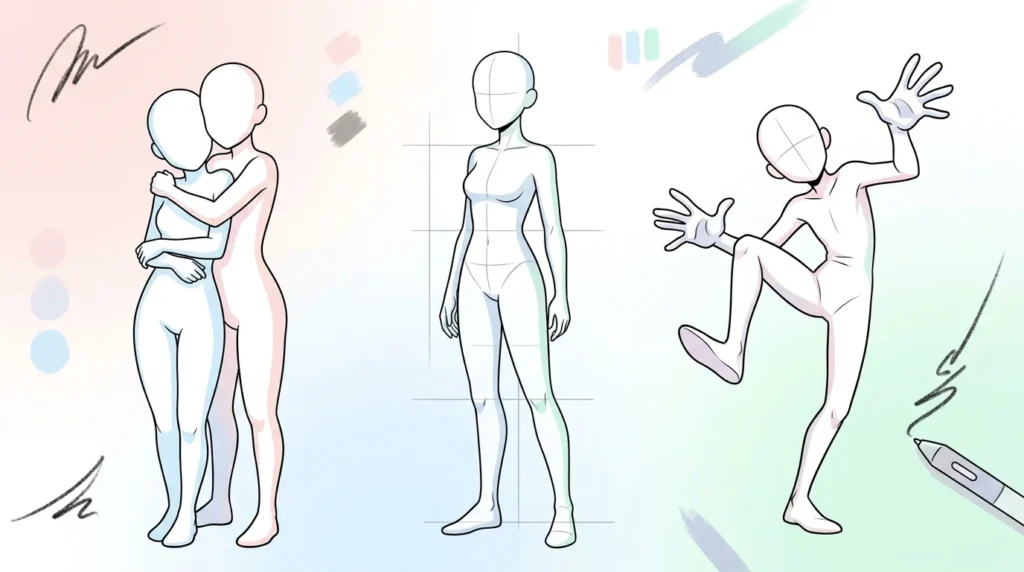
Anyone who has spent time in fan-art or original character (OC) communities on Pinterest, DeviantArt, or Tumblr has run into the word “base.” Art bases are one of the most widely used tools for artists who want to draw a character in a specific pose without starting from a blank page and fighting with anatomy from scratch. This guide covers what art bases actually are, the most common types — including duo art bases, OC body bases, and silly art bases — how to use them properly, where to find them ethically, and the etiquette that keeps this practice fair to the original creators.

This is written for beginner and hobbyist artists who keep seeing the term “base” pop up in reference tags and want a clear, practical explanation rather than scattered forum posts.
Quick Answer
An art base is a simple pre-drawn pose, outline, or template — usually a character silhouette or line-art figure — that other artists trace, color, or build on top of to create their own artwork. Bases save time on pose and anatomy planning, and they’re especially popular for original character (OC) art, character collaborations, and stylized “silly” meme-style drawings. Most bases are free for personal use, but commercial use or redistribution usually requires the original creator’s permission.
What Is an Art Base?
An art base is a template drawing — typically a body outline, pose, or simplified figure — created by one artist and shared for others to use as a starting point. Instead of freehand-drawing a pose, an artist traces or references the base’s proportions and posture, then adds their own character design, clothing, coloring, and details on top.
Bases exist because pose and anatomy are two of the hardest parts of figure drawing for less experienced artists to get right on the first try. A well-made base already has balanced proportions and a natural-looking pose, which lets the artist focus their energy on character design, color, and personality instead of fighting with limb placement.
It’s worth being precise about what a base is not. A base is not a finished piece of art, and using one is not the same as tracing someone else’s finished illustration — most bases are intentionally left plain, without rendered details, specifically so they can be built on top of. It’s also different from a general “pose reference,” which is usually a photo or sketch an artist looks at without directly tracing over it. Bases are meant to be traced or drawn over; references are meant to be studied.
Why Artists Use Art Bases
The appeal of bases comes down to a few practical benefits that show up constantly in beginner-artist communities.
For newer artists, bases remove the single biggest barrier to finishing a drawing: getting stuck on proportions before ever reaching the fun part of the process, like designing an outfit or expression. A base with clean, well-balanced anatomy lets a beginner practice character design and coloring without also having to master figure drawing at the same time.
For more experienced artists, bases are often used for speed rather than necessity — particularly for memes, “draw your OC doing this” trends, or quick collaborative pieces where the point is the joke or the character interaction, not a fully original pose. In practice, a common approach among artists who are otherwise capable of freehand figure drawing is to use a base specifically for time-limited content, like a meme template that’s currently trending, while reserving fully original poses for more serious portfolio pieces.
Bases are also a genuinely useful teaching tool. Tracing a well-constructed base repeatedly can help a beginner internalize proportion and weight distribution, in a similar way to how tracing letters helps someone learn handwriting — though this only works if the artist eventually transitions to drawing poses independently rather than relying on bases indefinitely.
Types of Art Bases
Bases aren’t a single format — they range from serious anatomical templates to intentionally goofy meme poses. The four types below come up most often in art communities.
Duo Art Base
A duo art base is a template featuring two figures interacting in a single pose — hugging, standing back-to-back, sitting together, or posed in some other two-character composition. Duo bases are especially popular for “ship” art (drawing two characters in a romantic or platonic relationship) and for collaborative pieces where two different artists each draw one of the two figures using the same base, then combine the results.
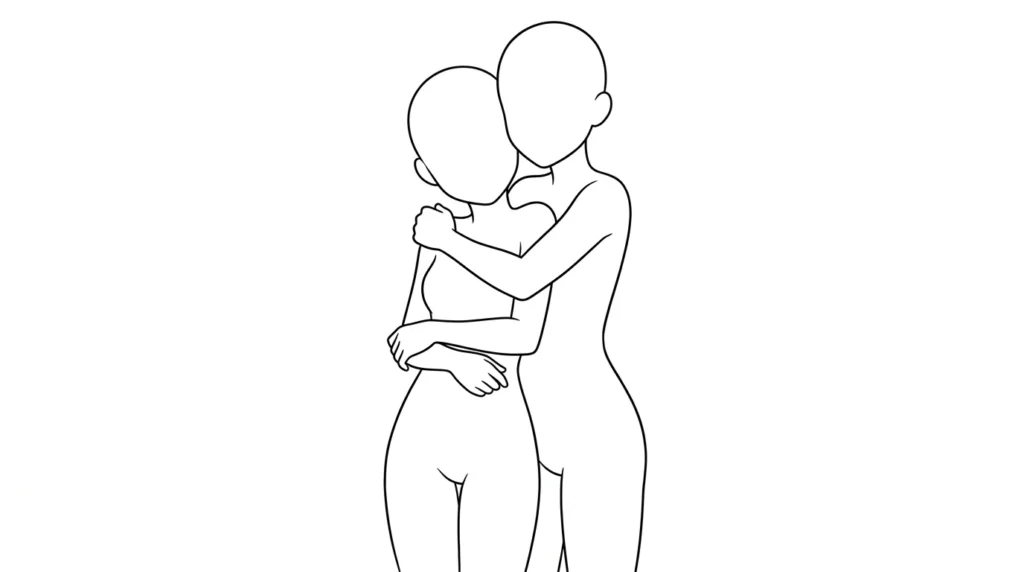
The main technical challenge with duo bases, compared to single-figure bases, is that both characters need to look visually balanced against each other — similar scale, consistent perspective, and a pose that reads clearly as an interaction rather than two unrelated figures placed side by side. A good duo base handles that balance for the artist already, which is a large part of why they’re used so heavily for interaction-focused fan art rather than solo pieces.
OC Body Base
An OC body base is a body template — usually a single standing, sitting, or action pose — meant specifically for designing an original character rather than fan art of an existing one. These bases are typically left as plain as possible: no established face, hairstyle, or clothing, so the artist can freely design the character’s full appearance from the base up.
OC body bases are especially common as a starting point for character sheets, since a consistent base pose makes it easier to compare design choices — outfit, proportions, color palette — across a “before and after” or across multiple character concepts using the same base. Some OC bases come in sets with the same character in several standard poses (front view, side view, action pose) specifically so an artist can build out a fuller reference sheet.
Silly Art Base
A silly art base is exactly what it sounds like — an exaggerated, humorous, or meme-oriented pose meant for lighthearted or comedic art rather than a serious character illustration. These often trend in waves tied to a specific meme format: a particular exaggerated expression, an oddly specific action pose, or an absurd scenario meant to be drawn with a reader’s own OCs or favorite characters.
Silly bases tend to have a shorter shelf life than duo or OC bases because they’re tied to whatever meme format is currently circulating on Pinterest, Tumblr, or TikTok, but they’re also one of the lowest-pressure ways for artists to participate in a trend without needing to plan an original pose. Because the whole point is humor rather than technical polish, silly bases are also a common entry point for artists who are intimidated by “serious” figure drawing but still want to draw their characters doing something fun.
Sketches vs. Bases: What’s the Difference?
This distinction trips up a lot of beginners, so it’s worth spelling out directly. A sketch, in the context of art bases, usually refers to a rough, loosely-drawn pose study — often made by the artist themselves as a planning step before final line art, rather than shared for other people to trace.
A base is meant to be reused by other people; a sketch is typically a personal working step, even when it gets shared publicly for inspiration rather than direct tracing. Some artists do use their own rough sketches as informal, personal “bases” for their own work-in-progress pieces — sketching a loose pose, then refining it into final art — but that’s a different use of the word than the shared, tracing-intended bases discussed elsewhere in this guide.
Practically, if a drawing is labeled “free base” or “free to use,” it’s meant to be traced or drawn over directly. If it’s labeled as a sketch, pose study, or reference without that language, it’s safer to treat it as something to study and redraw in your own style rather than trace line-for-line, since the creator likely didn’t intend it for direct reuse.
How to Use an Art Base: Step-by-Step
Using a base correctly is straightforward, but a few steps make a noticeable difference in the final result.
1. Find a base that matches the pose and mood you want. Searching by the specific type — duo art base, OC body base, silly art base — narrows results faster than a generic “art base” search.
2. Check the terms of use. Look for a caption, artist note, or linked terms explaining whether the base is free for personal use, requires credit, or restricts commercial use. This step gets skipped constantly by beginners and is the single most common source of etiquette problems in base communities.
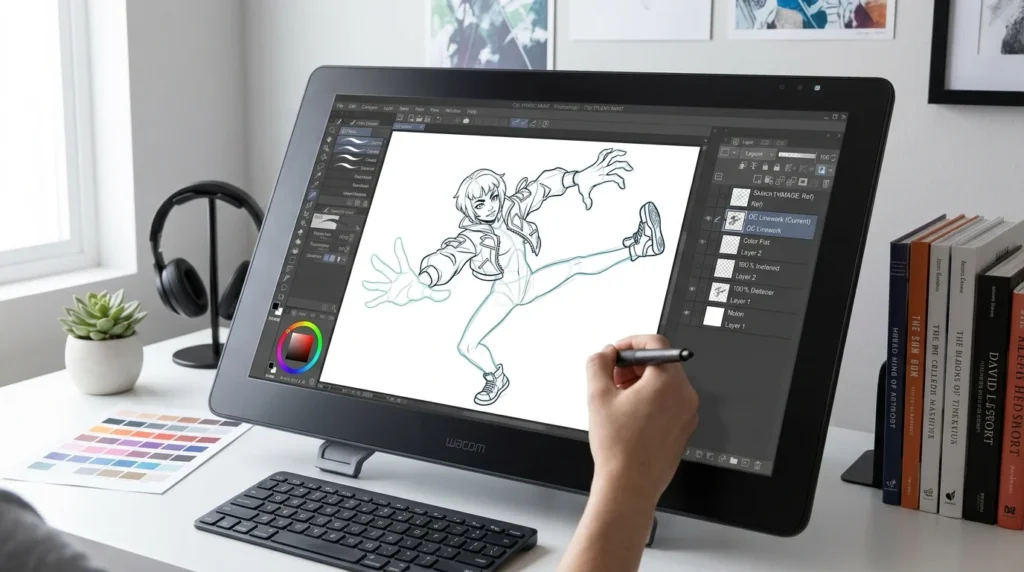
3. Import or trace the base at low opacity. In digital art programs, this usually means placing the base on its own layer, lowering the opacity to around 20–40%, and creating a new layer on top for your own linework. For traditional art, a lightbox or a printed, lightly-shaded copy works the same way.
4. Adjust proportions if needed. Not every base will perfectly fit every character concept — it’s common to stretch limbs slightly, adjust head size, or tweak posture to better match a specific character’s proportions before finalizing linework.
5. Draw your own linework on top. This is where the actual character design happens: face, hairstyle, clothing, accessories, and any stylistic choices that make the piece recognizably the artist’s own work rather than a direct copy of the base.
6. Delete or hide the base layer, then color and shade. Once the final linework is done, the base layer itself typically gets removed or hidden before finishing the piece.
7. Credit the base creator in the post. Even when a base is labeled free-to-use, crediting the original artist (a username, a link, or a simple “base by [artist]” caption) is standard etiquette across nearly every art community that shares bases.
A small but important detail beginners often miss: saving a working copy of the base separately from your final art file makes it easy to reuse the same base again later for a different character, without needing to re-search for it. Many artists who work through OC design sheets keep a small personal folder of bases they’ve been given permission to reuse, organized by pose type, rather than searching from scratch each time.
Where to Find Art Bases (Free and Ethical Sources)
Pinterest is the most common discovery platform for art bases, largely because it aggregates pins from the platforms where bases are actually hosted and shared — DeviantArt, Tumblr, and dedicated base-sharing accounts. Searching directly on DeviantArt or Tumblr using tags like “free base,” “free to use,” or the specific type needed (duo base, OC base, silly base) tends to surface the original source and its terms of use more reliably than a Pinterest pin alone, since pins frequently strip away the original caption and licensing information.
A practical habit worth building: whenever a base is found through Pinterest, click through to the original source rather than using the pinned image directly. This matters for two reasons — it confirms the actual usage terms rather than guessing, and it ensures credit goes to the correct original artist rather than whichever account happened to repost it.
Art Base Etiquette and Usage Rights
This is the part of using bases that most tutorials skip, and it’s also where most avoidable conflict in art communities comes from.
Most bases shared for free are intended for personal, non-commercial use — meaning fan art, personal OC pieces, and casual sharing are fine, but selling prints, using a base in paid commission work, or using it in a monetized project generally is not, unless the original creator’s terms explicitly allow it. When terms aren’t stated, the safest default is to treat the base as personal-use-only and ask the creator directly before using it commercially.
Credit is expected even when not explicitly demanded. The standard practice across most base-sharing communities is to name the base creator in the post description, even for casual social posts — leaving it uncredited is one of the most common sources of conflict between base artists and the people using their work.
Redistribution — reposting a base itself, rather than art made using it — is almost universally discouraged unless a creator explicitly allows it. Sharing a link to the original base post is the standard alternative to reposting the base file directly.
Finally, it’s worth noting that “free to use” and “free to trace exactly as-is with no changes” aren’t always the same thing. Some creators are fine with liberal adjustments to their base; others prefer the base’s core proportions and pose to stay recognizable. When in doubt, checking the creator’s specific notes — or simply asking — avoids most disputes before they start.
Common Mistakes People Make With Art Bases
- Skipping the terms-of-use check. Assuming every base found through Pinterest is automatically free and unrestricted is one of the most frequent sources of avoidable conflict.
- Forgetting to credit the base artist. Even a brief credit line prevents the majority of etiquette complaints in base-sharing communities.
- Using a base without adjusting proportions to fit the character. A base that isn’t customized at all can end up looking like a direct trace rather than original character art built on a starting template.
- Relying on bases indefinitely instead of practicing freehand poses. Bases are a legitimate tool, but leaning on them exclusively can slow down the development of independent figure-drawing skills over time.
- Reposting the base file itself instead of linking to the original. This is one of the fastest ways to upset a base creator, even when the intent wasn’t malicious.
- Confusing a “sketch” post with a “free base” post. Tracing a rough sketch that wasn’t intended for reuse is a different situation from using a labeled base, and treating the two the same can cause friction with the original artist.
Tips for Making Your Own Art Base
Artists who get comfortable with proportion and pose sometimes start creating their own bases to share. A few practices consistently separate well-used bases from ones that sit unused.
Keeping the base genuinely plain — no established face, hairstyle, or outfit — makes it far more flexible for other artists to build their own character on top of it. Clear, clean linework with minimal shading makes tracing easier, since heavily rendered bases are harder to draw over cleanly. Posting the base on its own separate layer or as a transparent PNG, when sharing digitally, saves other artists a step and tends to get more use as a result. Finally, writing out clear usage terms directly in the post — personal use only, credit required, commercial use allowed or not — removes the ambiguity that causes most of the etiquette problems described above, and tends to earn more consistent, respectful use from people who find the base later.
Why Art Bases Went Viral on Pinterest
Art bases have had a long history in fandom spaces going back to early DeviantArt communities, but their reach expanded significantly once Pinterest became a major discovery layer for art references. A few things about the platform make bases spread especially well there.
Pinterest’s board and pin format rewards exactly the kind of content bases are — a single clear image with an obvious, repeatable use case — which makes it easy for a base to get re-pinned across dozens of boards themed around “OC ideas,” “drawing references,” or “art poses.” Because Pinterest search surfaces visually similar pins together, a single popular duo base or silly base tends to pull in a wave of related bases in the same style, which is part of why certain aesthetics (chibi-style bases, specific meme formats, particular pose types) trend in clusters rather than as isolated images.
The trade-off is that Pinterest strips a lot of the original context. A pin often loses the artist’s original caption, terms of use, and sometimes even a working link back to the source post, which is a large part of why so many beginners end up unintentionally using bases without knowing the actual usage terms or crediting the right person. This is the main reason the “click through to the original source” habit mentioned earlier matters more on Pinterest than on platforms like DeviantArt or Tumblr, where the terms are usually still attached directly to the post.
Digital vs. Traditional Workflows With Bases
Most art base use today happens digitally, but the underlying technique works in either medium, with a few practical differences worth knowing.
In digital programs — Clip Studio Paint, Procreate, Photoshop, and similar tools — a base is typically imported as its own layer, opacity-reduced, and locked so it doesn’t shift while linework is added on a separate layer above it. This workflow makes it trivial to hide or delete the base layer once final lines are done, which is part of why digital bases dominate base-sharing communities: the base essentially disappears from the finished piece with no extra effort.
Traditional artists working on paper generally rely on a lightbox, a window with strong daylight, or a printed base lightened through a photocopier or printer setting, then trace over it in pencil before inking. This is slightly more involved than the digital version, and it’s part of why silly and duo bases in particular are used far more often by digital artists — the format lends itself to quick, disposable meme content in a way that a printed-and-traced traditional piece doesn’t as naturally support.
What is an art base?
An art base is a pre-drawn pose or character template that other artists trace or draw over to create their own artwork, usually left plain so the tracing artist can add their own character design on top.
Is it okay to trace an art base?
Yes, as long as the base is explicitly labeled free-to-use or free-to-trace, and the artist follows the creator’s stated terms, which usually include crediting the original base artist.
What’s the difference between a duo art base and an OC body base?
A duo art base features two figures in a single interactive pose, often used for ship art or two-artist collaborations. An OC body base is a single-figure template, usually left blank of face and clothing, meant as a starting point for designing an original character.
What makes a base “silly”?
A silly art base uses an exaggerated, comedic, or meme-inspired pose rather than a naturalistic one, and is typically tied to a specific trending meme format rather than meant for serious character illustration.
Can I use a free art base for commissioned or paid work?
Not by default. Most free bases are intended for personal, non-commercial use only. Commercial use generally requires direct permission from the base’s original creator.
Do I need to credit the artist if a base is labeled “free to use”?
Yes, in almost all cases. “Free to use” typically means free to trace without asking permission first, not free to use without credit.
Is using an art base considered tracing, and is that bad?
It’s a form of tracing, but it’s a widely accepted practice within art communities specifically because bases are created and shared for that purpose, unlike tracing someone’s finished, non-base artwork without permission.
How is a base different from a pose reference photo?
A reference photo is typically studied and redrawn in the artist’s own style, not traced directly. A base is specifically designed and shared to be traced or drawn over.
Where can I find art bases safely?
DeviantArt and Tumblr are common original sources, often discoverable through Pinterest, but it’s best to click through to the original post to confirm usage terms rather than relying on a Pinterest pin alone.
Will using bases stop me from improving as an artist?
Not if they’re used alongside regular freehand practice. Bases are useful for speed and confidence-building, but relying on them exclusively, without ever practicing original poses, can slow the development of independent figure-drawing skills.
Can I modify a base’s proportions or pose?
Often yes, but it depends on the individual creator’s terms — some welcome adjustments, others prefer the base’s core pose and proportions to remain recognizable. Checking the creator’s specific notes avoids most misunderstandings.
Final Takeaway
Art bases are a genuinely useful tool for beginner and experienced artists alike — they remove the anatomy guesswork from character art, make collaborative and meme-style drawing faster, and give newer artists a low-pressure way to practice character design without also fighting proportions from scratch. The practice only works well, though, when the community norms around it are respected: checking usage terms, crediting the original creator, and treating bases as a starting point rather than a shortcut around ever learning to draw a pose independently. Used that way, bases are less a shortcut and more a genuinely collaborative tradition between artists.

At Decor Artly, we bring art, home decor, and personal style together to create beautiful spaces and inspiring lifestyles. Led by Design Director Roni, we offer curated artwork, elegant home accents, and personalized styling to help you express your unique taste.