
Introduction
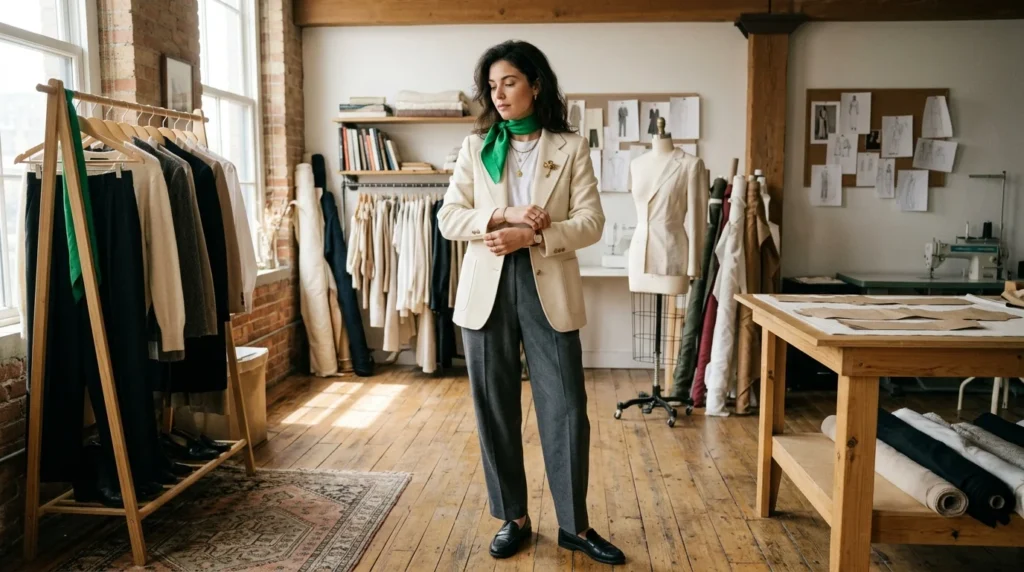
“Unique fashion” gets searched by two very different kinds of people: shoppers who are tired of seeing the same five outfits on every feed, and people trying to figure out how to actually build a personal style instead of just buying whatever is trending this month. This guide is for both. It covers what unique fashion really means, why it has become harder to achieve in an algorithm-driven shopping world, and the practical steps, sources, and mistakes to avoid when building a wardrobe that looks like you rather than a screenshot of someone else’s.
Quick Answer
Unique fashion means dressing in a way that reflects personal identity rather than copying a trend wholesale — through fit, color, sourcing, or small customizations that most closed-loop retail doesn’t offer. In practice, it usually combines a few strategies: buying from independent or small-batch designers, mixing in vintage or secondhand pieces, customizing basics, and building a small set of signature items that repeat across outfits.
What Is Unique Fashion, Really?
Unique fashion is not a specific aesthetic — it’s not the same as “eclectic,” “maximalist,” or “vintage-inspired,” although it can overlap with any of them. It’s better understood as an approach to dressing rather than a look. Someone in all black basics can have a unique fashion sense if the fit, the sourcing, and the small details are chosen deliberately. Someone in bold prints can look completely generic if every piece came from the same fast-fashion algorithm as everyone else’s.
A useful way to separate the idea from the marketing buzzword: unique fashion is about the ratio of pieces in a wardrobe that were chosen for personal reasons versus pieces chosen because they showed up in a “trending now” feed. A high ratio of personally-chosen pieces is what reads as a distinct style to other people, even if they can’t articulate why.
This matters for retailers and content creators too. A brand or blog using “unique fashion” as a keyword is really promising customers a way out of algorithmic sameness — and the content or product needs to actually deliver on that, not just use the word.
Why Unique Fashion Matters More Than Ever
A few forces have converged to make individual style harder to maintain, which is exactly why interest in unique fashion has grown.
Social platforms surface the same viral pieces to millions of people simultaneously. A single TikTok video can sell out a specific cardigan or bag across an entire country within days, which means thousands of people end up wearing an identical item at the same time — the opposite of what most of them were trying to achieve by buying it.
Fast-fashion retailers now compress the trend-to-shelf cycle to a matter of weeks, which means “current” fashion is really just whatever a small number of trend-forecasting algorithms decided was current. Because so many retailers pull from similar trend data, the options that show up in search results and ads increasingly converge on the same handful of silhouettes, colors, and prints each season.
At the same time, there’s a visible cultural pushback: the rise of “quiet luxury,” capsule wardrobes, thrifted and upcycled fashion, and small-batch or made-to-order labels are all, in different ways, reactions against algorithmic sameness. People are searching for unique fashion because they’ve noticed their own closets — and everyone else’s — starting to look the same, and they want a way back out.
There’s also a practical, longer-term reason this matters beyond aesthetics. Wardrobes built primarily around fast-moving trends tend to be replaced more frequently, since trend pieces fall out of relevance quickly and often aren’t built to last through repeated wear. A wardrobe built around personal style anchors, by contrast, tends to stay relevant to the person wearing it for years rather than months, simply because the selection criteria isn’t tied to a trend cycle in the first place. This makes unique fashion, in practice, a fairly direct answer to both the “everyone looks the same” complaint and the “I have nothing to wear despite owning so many clothes” complaint — two frustrations that often show up together.
Unique Fashion vs. Trend-Driven Fashion: What’s the Difference?
| Factor | Trend-Driven Fashion | Unique Fashion |
| Primary source | Large retailers, fast-fashion chains | Independent designers, vintage, customization, local makers |
| Selection driver | What’s currently trending on social feeds | Personal fit, story, or meaning |
| Production speed | Weeks from trend to shelf | Often slower — made-to-order, small-batch, or one-off |
| Repeat rate across other people | High — thousands of identical items sold | Low — limited runs or one-of-a-kind pieces |
| Cost pattern | Cheaper per item, frequent replacement | Can be similar cost, but often higher per-item value and longer wear |
| Longevity in a wardrobe | Often discarded after 1–2 seasons | Frequently becomes a long-term staple |
Neither approach is inherently wrong — most real wardrobes are a mix of both, and that’s fine. The goal isn’t to eliminate trend pieces entirely; it’s to make sure the wardrobe isn’t *only* trend pieces.
How to Develop a Unique Fashion Sense (Step-by-Step)
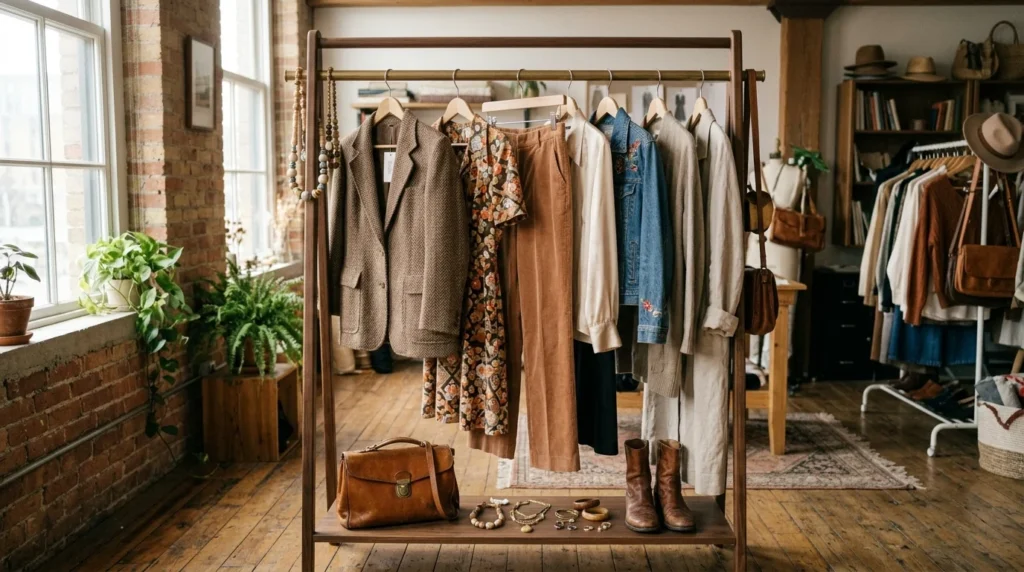
Building a distinct personal style is a process, not a single purchase decision. The following steps work whether someone is starting from scratch or trying to break out of a wardrobe that has quietly become generic.
Step 1: Audit Your Current Wardrobe
Before buying anything new, it helps to go through the closet and sort pieces into three groups: items worn because they’re genuinely loved, items worn because they’re convenient, and items that were bought because they were trending but rarely get worn. In practice, most closets skew heavily toward the second and third categories. This audit does two things — it reveals what’s actually being worn (which is the real signal for personal style, regardless of what was originally intended), and it identifies the gap between the wardrobe people have and the one they actually want.
Step 2: Identify Your Personal Style Anchors
Style anchors are the two or three elements — a color palette, a silhouette, a fabric preference, an era of design — that consistently show up in the “genuinely loved” pile from the audit. For most beginners, this is easier to spot in hindsight than to plan in advance. Common anchors include a preference for structured tailoring over relaxed fits, a consistent color story (warm neutrals, for example, instead of a rotating palette), or an attachment to a particular decade’s silhouettes. Once identified, these anchors become a filter for future purchases: does this new piece connect to an anchor, or is it an impulse trend buy that will likely end up unworn.
Step 3: Experiment Before Committing
A common mistake is treating personal style as something to discover once and lock in permanently. In practice, style anchors shift over time, and the way to find new ones is through low-cost experimentation — thrifting an item in an unfamiliar silhouette, borrowing a friend’s piece for an event, or renting rather than buying something outside the usual comfort zone. Secondhand and rental options are particularly useful here because they remove the financial risk of testing a new direction.
Step 4: Build a Signature Element
Many people who are described as having a “unique style” actually rely on one or two consistent signature elements rather than a wildly different outfit every day — a specific accessory, an unusual color choice repeated across otherwise simple outfits, or a tailoring detail. A signature element is memorable precisely because it’s consistent, which is a shortcut to looking distinct without needing an entirely unconventional wardrobe.
Where to Find Unique Fashion Pieces
Once the personal style direction is clearer, the sourcing matters just as much as the styling. A few channels consistently deliver less-repeated pieces than mainstream fast-fashion retail.
Independent and Small-Batch Designers
Independent designers typically produce in far smaller runs than large retailers, which naturally limits how many other people will own the same piece. Many operate through their own websites or platforms built for independent sellers, rather than mass retail channels. The trade-off is usually a higher price point and longer shipping or production times, since pieces may be made to order.
Vintage and Secondhand Shopping
Vintage and secondhand pieces are, by definition, no longer in mass production, which makes them one of the most reliable ways to find genuinely uncommon items. This includes physical thrift and consignment stores as well as online resale marketplaces. The trade-off is time — finding well-fitting, well-made secondhand pieces usually takes more searching than browsing a retailer’s current collection, and sizing can be inconsistent across eras and brands.
Customization and Personalization
A growing number of brands allow customers to modify a base product — adding initials, choosing non-standard color combinations, or requesting one-off design elements. This approach can turn even a fairly mainstream base piece into something functionally unique, since the customization options create near-infinite variation from the same starting inventory. It’s worth checking a brand’s actual customization options and turnaround time before assuming “personalized” always means truly one-of-a-kind.
Local Makers and Craft Markets
Local designers, tailors, and craft markets are often overlooked as a fashion source, but they tend to produce genuinely limited quantities and can frequently make small adjustments on request. This channel also supports local economies more directly than most online retail. The main limitation is availability — selection depends heavily on location, and there’s no guarantee a local market will have what a shopper needs for a specific occasion.
Building a Unique Fashion Capsule Wardrobe
A capsule wardrobe — a small, deliberately chosen set of pieces designed to mix and match — is one of the most practical frameworks for turning a personal style direction into something wearable every day, rather than a collection of one-off statement pieces that never quite go together.
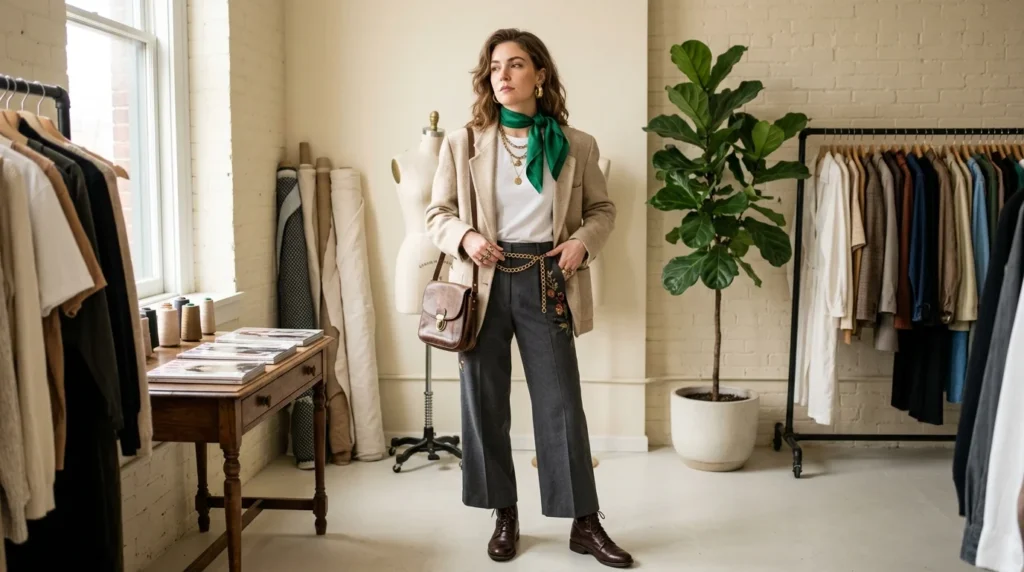
A workable unique-fashion capsule usually breaks down into three layers. The first is a small base of neutral, well-fitting essentials — a couple of trousers, a few simple tops, one or two outerwear pieces — sourced wherever is most practical, including mainstream retailers if needed. These don’t need to be exciting; their job is to be a reliable backdrop. The second layer is the style-anchor pieces identified during the wardrobe audit: the colors, silhouettes, or fabrics that consistently show up in the “genuinely loved” pile. These should make up a meaningful share of the capsule, since they’re what will actually make outfits feel personal. The third layer is a small number of signature or statement items — often the vintage find, the independent-designer piece, or the customized item — used sparingly to anchor an outfit rather than worn all at once.
A common failure mode is building a capsule that’s either all neutral base pieces (which ends up looking safe and generic despite the effort) or all statement pieces (which becomes exhausting to coordinate and often ends up half-unworn). The 60/30/10 rule — roughly 60% base, 30% style-anchor, 10% statement — is a reasonable starting ratio, though it should shift based on lifestyle and how much a person actually wants to stand out day-to-day versus at specific events.
How Small Brands and Retailers Can Genuinely Offer Unique Fashion
For businesses using “unique fashion” as a positioning or keyword, it’s worth being honest about what actually earns that description in a customer’s eyes, since the term gets used loosely enough that shoppers have grown skeptical of it.
Limited production runs are one of the clearest signals — publishing exact quantities produced, or numbering pieces, gives customers concrete proof that an item isn’t mass-produced, rather than just a marketing claim. Genuine customization options, where a customer can meaningfully change color, fit, or added details rather than just picking from a few preset variants, also differentiate a brand from retailers offering only cosmetic personalization. Sourcing transparency — showing where fabric comes from and who makes the garment — supports both the “unique” and the sustainability angle at once, since shoppers increasingly want to know a piece wasn’t produced identically for a mass market. Finally, collaborating with independent designers or local makers, rather than developing everything in-house from the same trend-forecasting data as competitors, tends to produce genuinely distinct product lines rather than a slightly different version of what every other retailer is already selling.
A practical mistake to avoid: applying the word “unique” to products that are actually mass-produced in large quantities. Beyond the marketing risk, customers who feel misled by an unearned “unique” claim tend to be vocal about it, which can do more brand damage than simply not using the word at all.
Sustainable Unique Fashion: What to Know
Unique fashion and sustainable fashion overlap frequently but aren’t the same thing. Secondhand and vintage shopping is inherently more sustainable because it doesn’t require new production. Small-batch and made-to-order pieces also tend to reduce overproduction and unsold inventory compared to mass retail forecasting, though this depends heavily on the specific brand’s materials and manufacturing practices.
However, “unique” is sometimes used as a marketing term without any sustainability claim behind it, so the two shouldn’t be assumed to go together automatically. Shoppers who care about both should look for specific, verifiable claims — material sourcing, certifications, or transparent supply chain information — rather than assuming a small or independent brand is automatically more sustainable than a large one. Scale and sustainability aren’t the same axis, even though they’re often marketed as if they were.
Common Mistakes People Make When Trying to Dress Unique
- Chasing “unique” as its own trend. Certain aesthetics marketed as alternative or individualistic — a particular thrifted look, a specific maximalist print combination — can become just as widely copied as anything from fast fashion, which defeats the purpose.
- Buying one statement piece per season instead of building anchors. A single bold item worn occasionally doesn’t build a recognizable personal style the way a few consistent, repeated elements do.
- Ignoring fit in favor of novelty. An unusual piece that doesn’t fit well often reads as ill-considered rather than intentional. Fit does more for a “put-together” impression than novelty does.
- Assuming higher price means more unique. Price and rarity aren’t the same thing; some expensive designer pieces are produced and worn in far larger numbers than a well-chosen secondhand find.
- Overhauling the entire wardrobe at once. A full-closet replacement is expensive, wasteful, and skips the audit-and-experiment process that actually reveals genuine personal preferences.
- Neglecting alterations. A secondhand or vintage piece that’s slightly off in fit is often only a simple tailoring adjustment away from looking intentional rather than ill-fitting — a step that gets skipped more often than it should.
- Treating every outfit as a statement. Wearing several unrelated bold pieces at once tends to compete rather than combine; the capsule-wardrobe approach of one anchor per outfit generally reads as more deliberate.
Styling Unique Fashion Pieces for Different Occasions
A distinct personal style doesn’t have to mean the same intensity of individuality at every event — matching the level of “unique” to the occasion tends to work better than a one-size-fits-all approach.
For everyday and work settings, the capsule-wardrobe layering described above works well: a neutral, reliable base with one style-anchor piece doing most of the “personal” work, kept subtle enough not to distract from a workday. For social occasions and events, this is usually where the statement or signature pieces get more room — a vintage find, a customized item, or something from an independent designer can take center stage without needing to be balanced against a dress code. For special occasions such as weddings or formal events, unique fashion often shows up best through detail rather than overall silhouette — a custom accessory, an alteration, or a fabric choice that stands out subtly rather than a fully unconventional outfit that risks clashing with the event’s tone. Matching the visibility of a personal style choice to the setting is often what separates “distinctive” from “distracting” in other people’s eyes.
Expert Tips for Making Unique Fashion Work in Everyday Life
Practical, sustainable individuality tends to come down to a handful of habits rather than any single dramatic purchase.
Building outfits around a small, consistent color palette makes even a mixed wardrobe of vintage, independent, and mainstream pieces look coordinated rather than chaotic. Keeping a running list — physical or digital — of pieces that felt distinctly “right” when worn helps identify style anchors more accurately than trying to reason it out abstractly. Rotating between a few reliable sourcing channels (one thrift store, one or two independent sellers, one customization brand) tends to work better than an unfocused search across dozens of platforms, simply because familiarity with sizing and quality at a few trusted sources saves time and reduces returns. Finally, it helps to treat trend pieces as occasional accents rather than wardrobe foundations — a trendy item mixed into an otherwise personal-style-driven outfit reads very differently than a trend-driven outfit with one thrifted accessory.
Unique Fashion on a Budget
Building a distinct wardrobe doesn’t require a large budget, and in many cases the lowest-cost sourcing channels — thrift stores, consignment shops, clothing swaps, and secondhand marketplaces — are also the ones most likely to produce genuinely uncommon pieces. A practical budget approach usually looks like this: source basics and everyday pieces secondhand, save a smaller budget for one or two higher-quality signature items from an independent designer, and use simple customization (a tailor’s alteration, a patch, a dye job) to make inexpensive pieces feel more intentional. This combination tends to produce a more distinct wardrobe than spending the same total budget on trend-driven pieces from mainstream retailers.
Frequently Asked Questions
What does “unique fashion” actually mean?
It refers to a personal approach to dressing based on individual fit, sourcing, and taste rather than following current trends wholesale. It’s a mindset and a sourcing strategy, not a single specific aesthetic.
Is unique fashion the same as vintage fashion?
No. Vintage is one common source of unique pieces, but unique fashion can also come from independent designers, customization, or thoughtful mixing of mainstream basics with distinct accents.
How can I build a unique style if I’m on a tight budget?
Focus on secondhand and thrifted basics, save a small budget for one or two signature pieces, and use low-cost customization like tailoring or simple embellishments to make existing pieces feel more personal.
Does dressing uniquely mean avoiding trends completely?
Not necessarily. Most people mix a few trend pieces into an otherwise personal-style-driven wardrobe. The goal is balance, not total trend avoidance.
Where is the best place to find one-of-a-kind clothing?
Vintage and secondhand shops, independent or small-batch designers, local makers and craft markets, and customization-focused brands are the most reliable sources for pieces that aren’t mass-produced.
How do I know what my personal style actually is?
Audit your current wardrobe for pieces you genuinely reach for and love, look for common threads (color, silhouette, era), and treat those as your style anchors going forward.
Is unique fashion more expensive than fast fashion?
Not necessarily. Secondhand shopping is often cheaper than fast fashion, and even independent or customized pieces, while sometimes pricier per item, tend to be worn longer and replaced less often.
Can a mainstream brand still be part of a unique wardrobe?
Yes. Basics from mainstream brands can work well as a neutral foundation when they’re styled alongside distinct, personally-chosen pieces rather than making up the entire outfit.
How often should I update my personal style?
There’s no fixed timeline. Style anchors can shift gradually over years; it’s more useful to keep experimenting with low-cost pieces than to force a scheduled “reinvention.”
Is customization worth it if I’m not sure about my style yet?
It can be, for low-cost customizations like alterations or small embellishments. Larger, more expensive customization is usually better suited to pieces built around style anchors that are already fairly well established.
Final Takeaway
Unique fashion isn’t about avoiding every trend or spending more money — it’s about shifting the ratio of a wardrobe toward pieces chosen for personal reasons rather than algorithmic ones. Start with an honest audit of what’s already being worn and loved, identify the style anchors hiding in that pile, and build outward from there through vintage, independent, local, and customized sourcing. The wardrobe that results won’t just look different from everyone else’s — it will actually be more consistently and easily worn, because every piece in it was chosen on purpose.
At Decor Artly, we bring art, home decor, and personal style together to create beautiful spaces and inspiring lifestyles. Led by Design Director Roni, we offer curated artwork, elegant home accents, and personalized styling to help you express your unique taste.