
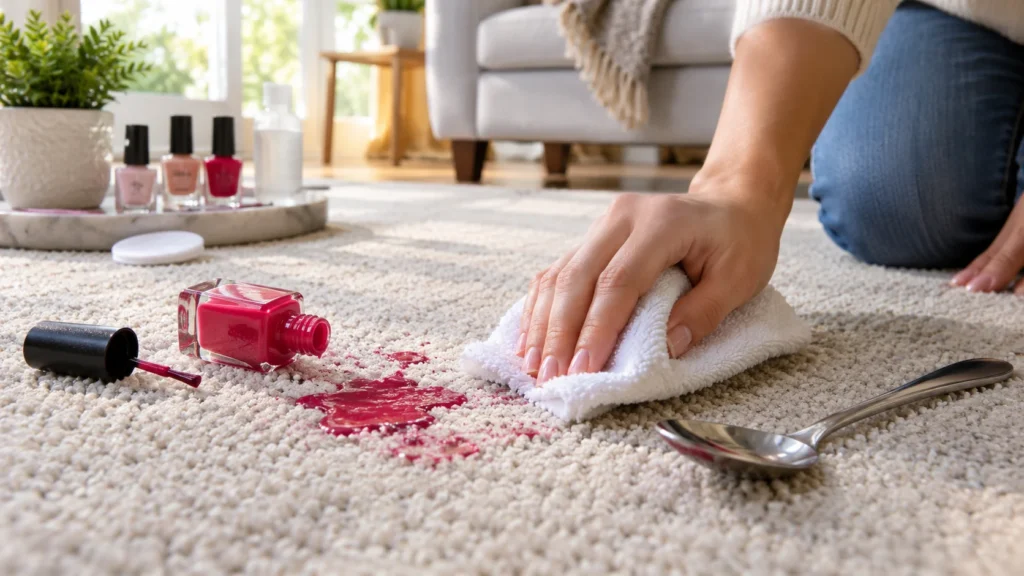
A dropped bottle of nail polish on carpet is the kind of accident that triggers immediate panic — and for good reason, since nail varnish dries fast and can genuinely set into carpet fibers if you wait too long. The good news is that both fresh spills and, in many cases, older dried stains can be treated successfully with the right method and the right product for your specific carpet. This guide walks through exactly what to do, starting with the first sixty seconds after the spill.
Quick Answer: Can Nail Varnish Be Removed From Carpet?
In most cases, yes. Fresh nail varnish spills respond well to blotting with a solvent — acetone-based nail polish remover on more resilient carpets, or gentler alternatives like rubbing alcohol on delicate or wool carpets — followed by blotting with cold water and mild dish soap to lift any remaining residue. Dried, older stains are harder but often still treatable using the same solvents with more patience and repeated applications. The single most important factor in success is acting quickly and blotting rather than rubbing, since rubbing spreads the stain and pushes it deeper into the fibers.
Act Fast: What to Do in the First Few Minutes
The moment nail varnish hits carpet, time matters more than almost any other factor in whether it comes out cleanly. Immediately scrape up any excess polish sitting on top of the fibers using the edge of a spoon or a dull knife, working from the outer edge of the spill inward so you don’t spread it further. Avoid the instinct to grab a cloth and rub — this is the single most common mistake people make under pressure, and it pushes the polish deeper into the carpet pile rather than lifting it out.
Once the excess is scraped away, blot (don’t rub) the remaining stain with a clean, dry cloth to absorb as much wet polish as possible before moving on to a solvent. This initial scrape-and-blot step alone can significantly reduce how much staining sets in, even before you apply anything else.
What You’ll Need Before You Start
Gather these materials before beginning treatment:
- Acetone-based nail polish remover (for more resilient, synthetic carpets) or rubbing alcohol (a gentler alternative for delicate or wool carpets)
- Clean white cloths or paper towels, since colored cloths can transfer dye onto damp carpet
- Mild dish soap and cold water, for the follow-up cleaning step
- A small, inconspicuous area of carpet (like inside a closet or under furniture) for a colorfastness test before treating the visible stain
Having everything ready before you start matters, since moving quickly between steps — rather than pausing to search for supplies — helps prevent the stain from setting further while you work.
How Do You Get Nail Varnish Out of Carpet? Step-by-Step
Once you’ve scraped away excess polish and gathered your materials, this is the core method for lifting the remaining stain.
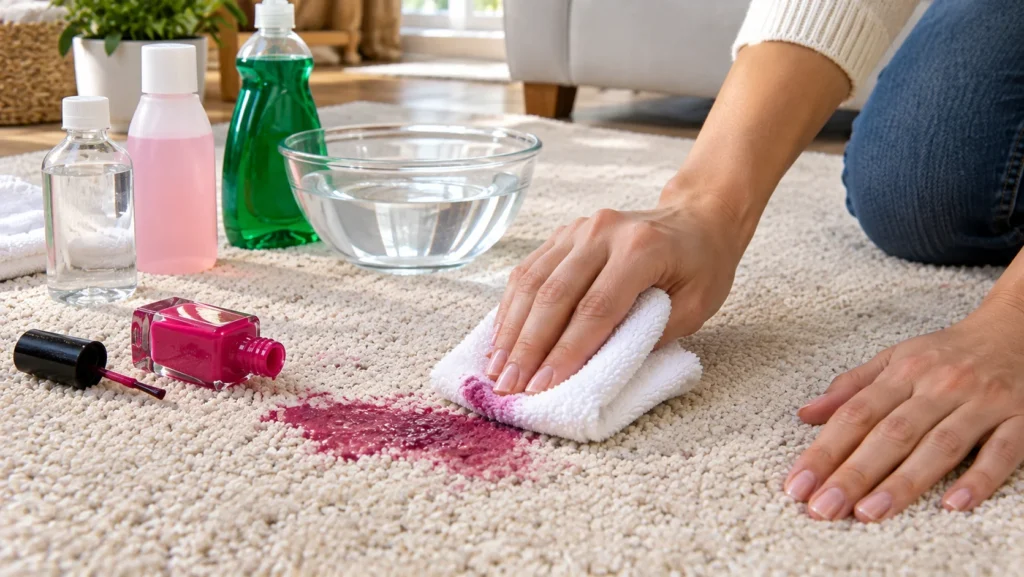
- Test your solvent on a hidden area first. Apply a small amount of your chosen solvent (acetone remover or rubbing alcohol) to a hidden section of carpet and blot with a white cloth. If there’s no color transfer or fiber damage after a few minutes, it’s safe to proceed on the visible stain.
- Apply solvent to a clean cloth, not directly to the carpet. Dampen a clean white cloth with your solvent rather than pouring it straight onto the stain, which helps control how much product contacts the fibers.
- Blot from the outside in. Press the dampened cloth onto the stain and blot gently, working from the outer edge toward the center. This prevents the stain from spreading outward as it lifts.
- Switch to a clean section of cloth frequently. As the cloth picks up polish, rotate to a clean section rather than continuing to blot with a saturated area, which can redeposit the stain back onto the carpet.
- Repeat as needed. Nail varnish often requires several rounds of blotting to fully lift, especially if any of it had begun to dry before treatment. Patience here produces better results than pressing harder or using more product at once.
- Rinse with cold water and mild dish soap. Once the polish is lifted, blot the area with a cloth dampened in a mixture of cold water and a small amount of mild dish soap to remove any remaining solvent residue.
- Blot dry and let the area air out. Press a dry towel firmly over the treated area to absorb excess moisture, then allow it to air dry completely, avoiding foot traffic on the spot until it’s fully dry.
Removing Dried or Older Stains
A dried nail varnish stain is genuinely more stubborn than a fresh one, but it’s frequently still treatable using the same core method with a few adjustments. Rather than a single blotting session, dried stains typically need the solvent to sit for a short period — a minute or two — before blotting, to give it time to begin softening the hardened polish. Gently working the cloth in small, repeated blotting motions (still never rubbing) over several rounds tends to gradually break down and lift dried product that wouldn’t budge on the first attempt.
If a stain has been sitting for an extended period and multiple rounds of treatment aren’t showing improvement, that’s a reasonable point to consider a professional carpet cleaning service rather than continuing to apply solvent repeatedly, which can eventually begin to affect the carpet’s texture or backing with excessive treatment.
Carpet Type Matters: Test Before You Treat
This is the step that’s easy to skip under pressure but genuinely matters. Acetone is the most effective solvent for dissolving nail varnish, but it can damage or dissolve certain synthetic carpet fibers, particularly some types of acrylic or rayon-blend carpets, and can also strip dye from some materials. Wool and other natural fiber carpets are generally more sensitive to acetone and often respond better to rubbing alcohol instead, which is gentler while still being effective against nail varnish.
If you’re not certain what your carpet is made from, the colorfastness test described in the steps above isn’t optional — it’s the practical way to find out whether your specific solvent is safe before you risk a visible mark spreading beyond the original stain.
Common Mistakes to Avoid
Rubbing instead of blotting. This is, by a wide margin, the most common mistake, and it actively makes the problem worse by pushing polish deeper into the fibers and spreading the stain outward.
Skipping the colorfastness test to save time. Applying acetone directly to a visible stain without testing first can result in fiber damage or discoloration that’s more noticeable and harder to fix than the original nail polish stain.
Using too much solvent at once. Oversaturating the carpet doesn’t speed up the process and can push polish and solvent deeper into the padding beneath the carpet, making the cleanup more difficult overall.
Giving up after one attempt on a dried stain. Older, set-in stains often require multiple rounds of treatment — a single blotting session not fully removing a dried stain doesn’t mean the stain is permanent.
Expert Tips for Better Results
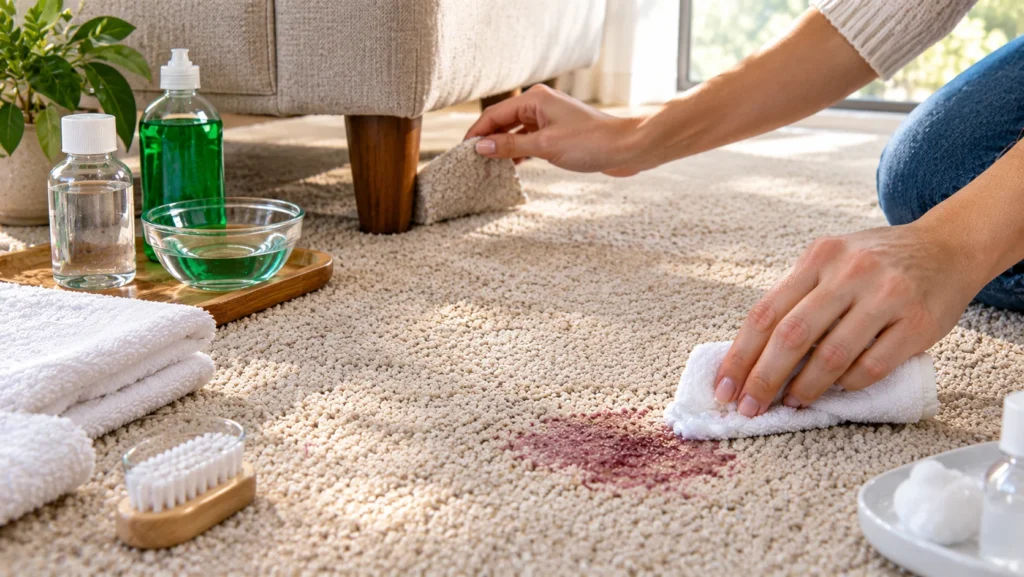
- Keep a small stash of acetone-based remover, rubbing alcohol, and clean white cloths in your home cleaning supplies specifically for accidents like this, since acting within the first few minutes makes the biggest difference in outcome.
- If you’re unsure whether your carpet is synthetic or natural fiber, checking the manufacturer’s care instructions (often available from the retailer or installer) before treating a stain can save you from choosing the wrong solvent.
- For particularly stubborn dried stains, gently working a small amount of solvent under the stain with a dull tool (like the back of a spoon) between blotting rounds can help loosen product that’s bonded deeply into the pile.
- If a stain persists after several careful attempts, stop treating it yourself and consult a professional carpet cleaner before the area is further stressed by repeated solvent application.
Frequently Asked Questions
Dried stains generally respond to the same acetone or rubbing alcohol method used on fresh spills, but require letting the solvent sit briefly before blotting, and often need several repeated rounds of treatment rather than a single application.
It depends on the carpet’s fiber type — acetone is effective at dissolving nail varnish but can damage certain synthetic fibers like acrylic or rayon blends, so testing on a hidden area first is essential before treating a visible stain.
Yes, rubbing alcohol is a commonly recommended, gentler alternative to acetone, particularly for wool or other natural fiber carpets that are more sensitive to stronger solvents.
It’s possible with certain carpet materials and dyes, which is why testing the solvent on a small, hidden area before treating the visible stain is a critical safety step rather than an optional one.
Often yes, though they typically require more patience and multiple rounds of treatment compared to a fresh spill; if repeated attempts don’t show improvement, a professional carpet cleaner is a reasonable next step.
Always blot, never rub. Rubbing spreads the stain and pushes it deeper into the carpet fibers, while blotting lifts the polish out without spreading it further.
What household products work besides acetone?
Rubbing alcohol is the most commonly cited alternative, and hairspray (which typically contains alcohol) is sometimes mentioned as a similar option, though effectiveness can vary and testing on a hidden area remains important regardless of which product you use.
How long does it take to remove a nail polish stain from carpet?
A fresh spill can often be fully lifted within a single careful treatment session, while dried or older stains may require several repeated rounds over a longer period.
Can I use a carpet cleaning machine instead of blotting by hand?
Manual blotting with the correct solvent is generally the recommended first approach for a localized stain like this, since it allows more control; a carpet cleaning machine is typically better suited to broader, general carpet cleaning rather than treating a specific solvent-based stain.
When should I call a professional instead of treating it myself?
If multiple careful attempts with the appropriate solvent haven’t improved a dried or stubborn stain, or if you’re unsure about your carpet’s fiber type and don’t want to risk testing solvents yourself, a professional carpet cleaner is a reasonable and safer next step.
Final Takeaway
Getting nail varnish out of carpet successfully comes down to speed, the right solvent for your carpet type, and patient blotting rather than rubbing. Scrape away excess polish immediately, test your chosen solvent on a hidden area first, and work in careful, repeated blotting motions rather than trying to force the stain out in one aggressive pass. For dried or stubborn stains that don’t respond after a few careful attempts, a professional carpet cleaner is a sensible fallback rather than continuing to apply solvent indefinitely.

At Decor Artly, we bring art, home decor, and personal style together to create beautiful spaces and inspiring lifestyles. Led by Design Director Roni, we offer curated artwork, elegant home accents, and personalized styling to help you express your unique taste.