
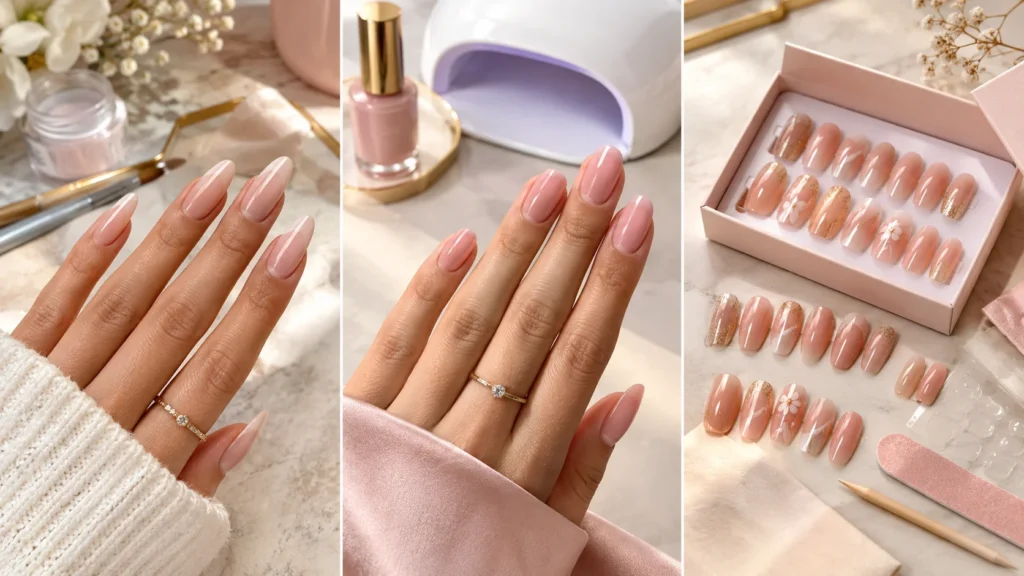
Acrylic, gel, and press-on nails all promise the same basic thing — longer, more polished-looking nails without waiting for your natural ones to grow — but the similarities largely end there. They’re built differently, wear differently, cost differently over time, and affect your natural nails differently. This guide breaks down exactly how they compare, so you can choose based on what actually matters for your lifestyle rather than guessing.
Quick Answer: Which Type of Artificial Nail Is Best?
There’s no single “best” option — it depends on your priorities. Acrylic is the most durable and affordable per-fill option for long-term wear, gel offers a more natural, glossy finish with a gentler removal process, and press-on nails are the fastest, most affordable, and most damage-free choice for occasional or at-home use. If durability matters most, acrylic tends to win; if a natural look and easier removal matter most, gel tends to win; if convenience and nail health matter most, press-ons tend to win.
What Each Type Actually Is
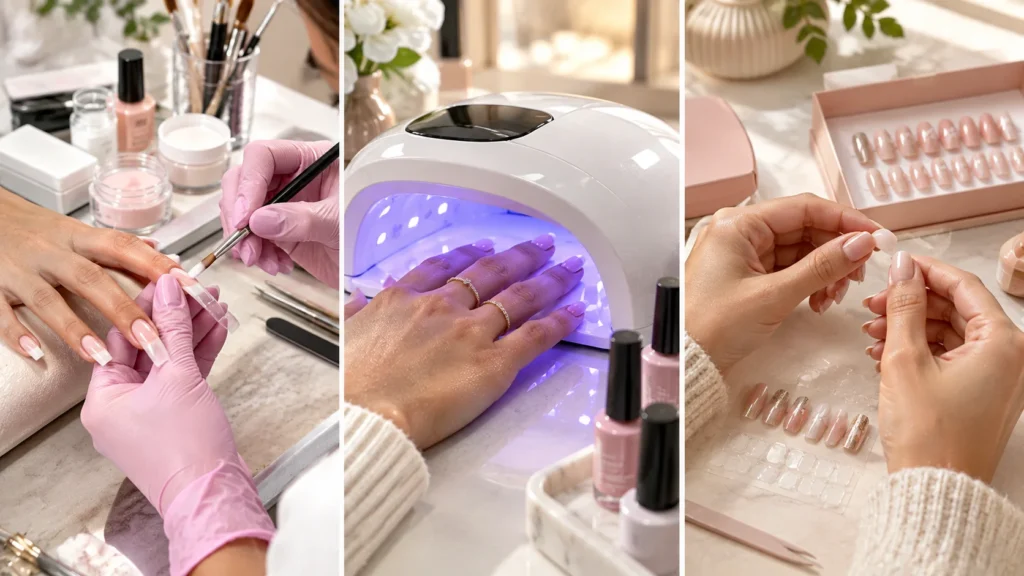
Acrylic nails are created by mixing a liquid monomer with a powder polymer, which a nail technician sculpts onto the nail (often over a tip or form) before it air-dries into a hard, durable surface. This is the oldest and most established of the three methods, known for its strength and ability to hold intricate shapes and lengths.
Gel nails are built using a gel polymer that’s cured under a UV or LED lamp rather than air-drying. This includes both simpler gel polish overlays and more structural systems like Gel-X, which use a soft gel material applied over a form to create extensions. Gel is generally known for a glossier, more flexible, and more natural-looking finish than traditional acrylic.
Press-on nails are pre-manufactured nail shapes, sized and trimmed to fit, then applied with adhesive tabs or nail glue. Unlike acrylic and gel, there’s no chemical mixing or curing light involved, and they can be applied entirely at home without professional training.
Acrylic vs Gel vs Press-On Nails: Side-by-Side Comparison
| Factor | Acrylic | Gel | Press-On |
|---|---|---|---|
| Durability | Very durable, resists chipping well | Durable but can be more prone to chipping than acrylic | Varies by brand; generally less durable than professional acrylic/gel |
| Finish | Can look slightly less natural, very versatile for shaping | Glossy, natural-looking, flexible | Ranges widely by quality, often very natural-looking now |
| Application | Requires a trained technician | Requires a trained technician (or an at-home UV/LED kit) | Can be done entirely at home, no training needed |
| Removal | Requires acetone soak, best done professionally | Requires acetone soak, generally gentler on nails than acrylic | Peels off or soaks off in minutes, gentlest option |
| Typical wear time | 2–3 weeks before a fill is needed | 2–3 weeks before a fill is needed | Single day to about 1–2 weeks, depending on application method |
| Nail health impact | Can weaken nails if improperly removed | Generally considered gentler than acrylic if removed correctly | Lowest risk of damage, especially with adhesive tabs over glue |
This table captures the core trade-offs, but a few of these factors deserve more context than a single row can offer — particularly cost and nail health, covered next.
Cost and Time Investment Compared
Acrylic and gel both typically require an initial salon appointment followed by regular fills every two to three weeks as the natural nail grows out, which adds up in both cost and time commitment over months of continuous wear. Gel often carries a slightly higher price per appointment than acrylic in many markets, though this varies significantly by location and salon.
Press-on nails are generally the most budget-friendly option upfront and require no ongoing salon appointments at all, since they’re applied and removed at home. The trade-off is that they typically need to be replaced or reapplied more frequently than a professional acrylic or gel set, particularly with adhesive-tab application, which is less long-lasting than nail glue or a professional gel/acrylic bond.
Nail Health Considerations
This is one of the most commonly oversimplified comparisons in nail content, so it’s worth being precise. Neither acrylic nor gel is inherently damaging to natural nails — damage in both cases almost always comes down to improper removal (peeling or prying rather than properly soaking off) rather than the product itself. That said, gel is generally considered somewhat gentler in practice, partly because its removal process tends to be less aggressive and partly because the product itself is more flexible than hard acrylic.
Press-on nails carry the lowest risk of nail damage overall, particularly when applied with adhesive tabs rather than glue, since they require no filing of the natural nail surface and can be removed without any acetone soak. However, this advantage shrinks if press-ons are applied with strong nail glue and then forcibly removed rather than properly soaked off, which can cause similar damage to improperly removed acrylic or gel.
Which One Should You Choose?
If you want maximum durability and don’t mind regular salon visits, acrylic remains the most tested, durable option, particularly for anyone who’s hard on their hands or wants dramatic length and shape. If you want a natural, glossy look with a gentler overall experience, gel is generally the better fit, especially for shorter, more everyday-wearable styles. If you want flexibility, low cost, and minimal commitment — or you simply prefer doing your nails yourself — press-on nails have become a genuinely strong option, particularly as quality has improved significantly across the category in recent years.
Common Mistakes to Avoid
Assuming all three options require the same removal process. Acrylic and gel both need acetone soaking, while quality press-ons are designed to be peeled or soaked off far more easily — treating them the same way often means unnecessary extra effort.
Choosing based on price alone without factoring in frequency. Press-ons look cheaper per set, but frequent replacement can add up; acrylic and gel fills add up differently over the same time period, so it’s worth comparing total cost over a few months, not just one appointment.
Blaming the product type for damage caused by improper removal. Nail health outcomes come down to technique far more than which of the three you choose — peeling or prying is the real risk factor, regardless of the product.
Expert Tips
- If you’re unsure which to try first, press-on nails are the lowest-commitment way to test a length or shape before investing in a professional acrylic or gel appointment.
- For gel or acrylic, always confirm with your technician that removal will involve proper acetone soaking rather than filing or peeling, since this is the biggest controllable factor in nail health outcomes.
- If nail health is your top priority but you still want longer wear than a basic press-on, ask about gel specifically, since it’s generally considered a middle ground between acrylic’s durability and press-on’s gentleness.
Frequently Asked Questions
Both typically last two to three weeks before needing a fill, with acrylic often considered slightly more durable and chip-resistant overall, though this can vary by brand and application quality.
Quality has improved significantly in recent years, and many press-on options now offer a comparably natural look, though they generally don’t match the same wear duration as a professionally applied acrylic or gel set.
Neither is inherently worse when removed properly; damage in both cases is almost always linked to improper removal (peeling or prying) rather than the product itself, though gel’s removal process is generally considered somewhat gentler.
Yes, with an at-home UV/LED kit, though achieving salon-quality results typically requires more practice than press-on nails, which need no curing light or professional technique.
It depends on frequency of replacement — press-ons cost less per set but may need replacing more often, while acrylic and gel involve regular salon fill costs; comparing total cost over a few months gives a more accurate picture than a single appointment price.
Generally less than acrylic or gel, particularly with adhesive tabs rather than glue, since they require no filing of the nail surface and can be removed without an acetone soak.
Gel and high-quality press-on nails are both generally considered to offer a more natural look than traditional hard acrylic, though this varies significantly by specific product and application skill.
Yes, both typically require acetone soaking rather than peeling, though gel’s removal process is generally considered gentler on the nail plate than acrylic’s.
Final Takeaway
Choosing between acrylic, gel, and press-on nails comes down to what you’re actually optimizing for — durability and dramatic shaping favor acrylic, a natural glossy finish with easier removal favors gel, and low cost, flexibility, and minimal nail impact favor press-ons. None of the three is inherently “bad” for your nails when applied and removed correctly, so the real decision is about lifestyle fit rather than which option is objectively superior.

At Decor Artly, we bring art, home decor, and personal style together to create beautiful spaces and inspiring lifestyles. Led by Design Director Roni, we offer curated artwork, elegant home accents, and personalized styling to help you express your unique taste.