

A Christmas garland is a long strand of greenery, real or artificial, decorated with lights, berries, pinecones, ribbon, or ornaments and draped along mantels, staircases, doorways, and shelves. It is the most versatile Christmas decoration there is, because one strand can soften a fireplace, dress a banister, or frame a doorway in minutes. This guide covers the types of garland, how much you need, how to hang it without damage, and the styling tricks that make it look full and expensive.
Where Can You Use a Christmas Garland?
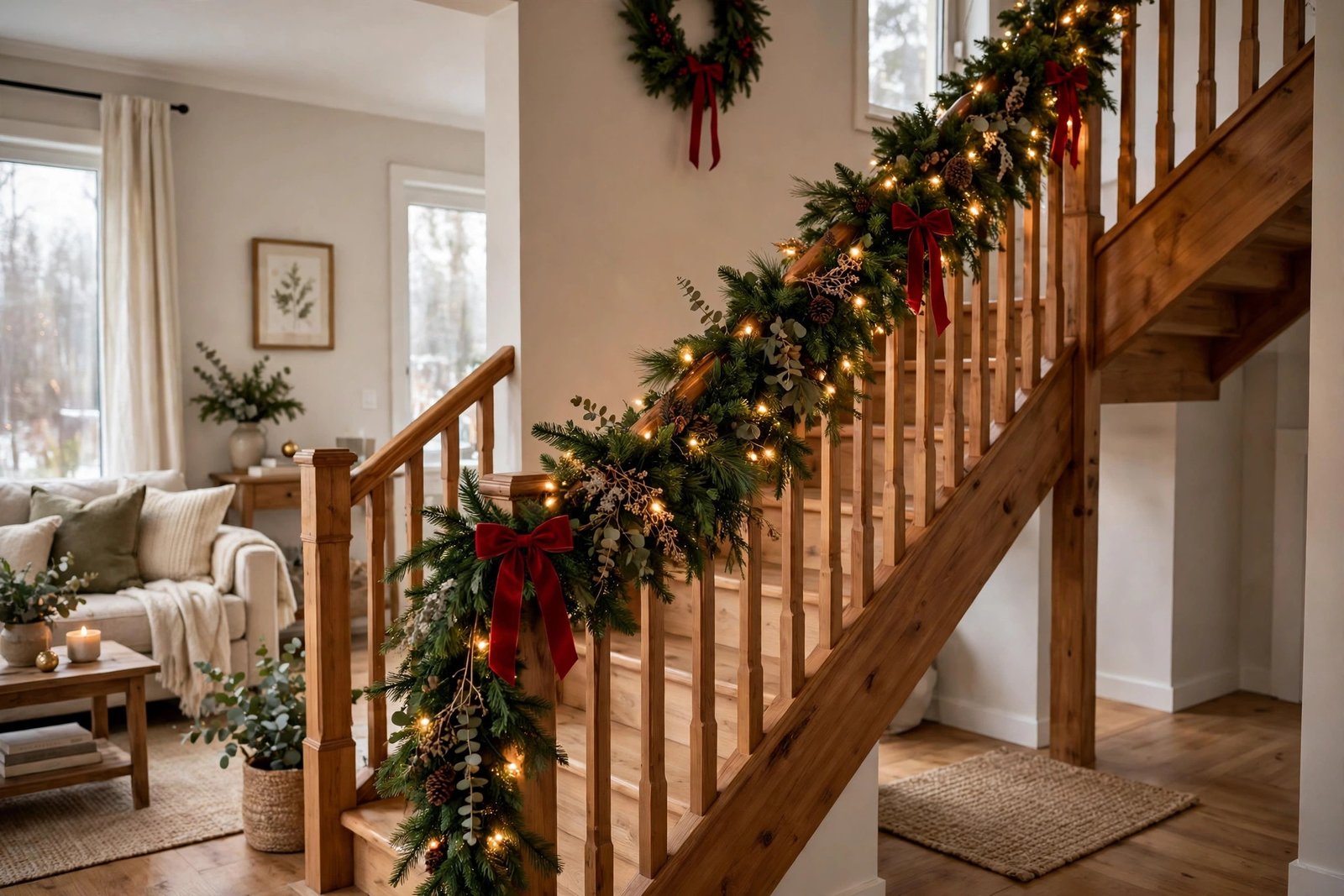
Almost anywhere with an edge or a line to follow. The mantel is the classic spot, where a garland anchors stockings, candles, and the room’s whole Christmas arrangement, and our Christmas mantle ideas guide shows how to build that full picture. Staircase banisters are the second favorite: a garland swagged along the rail greets everyone who uses the stairs.
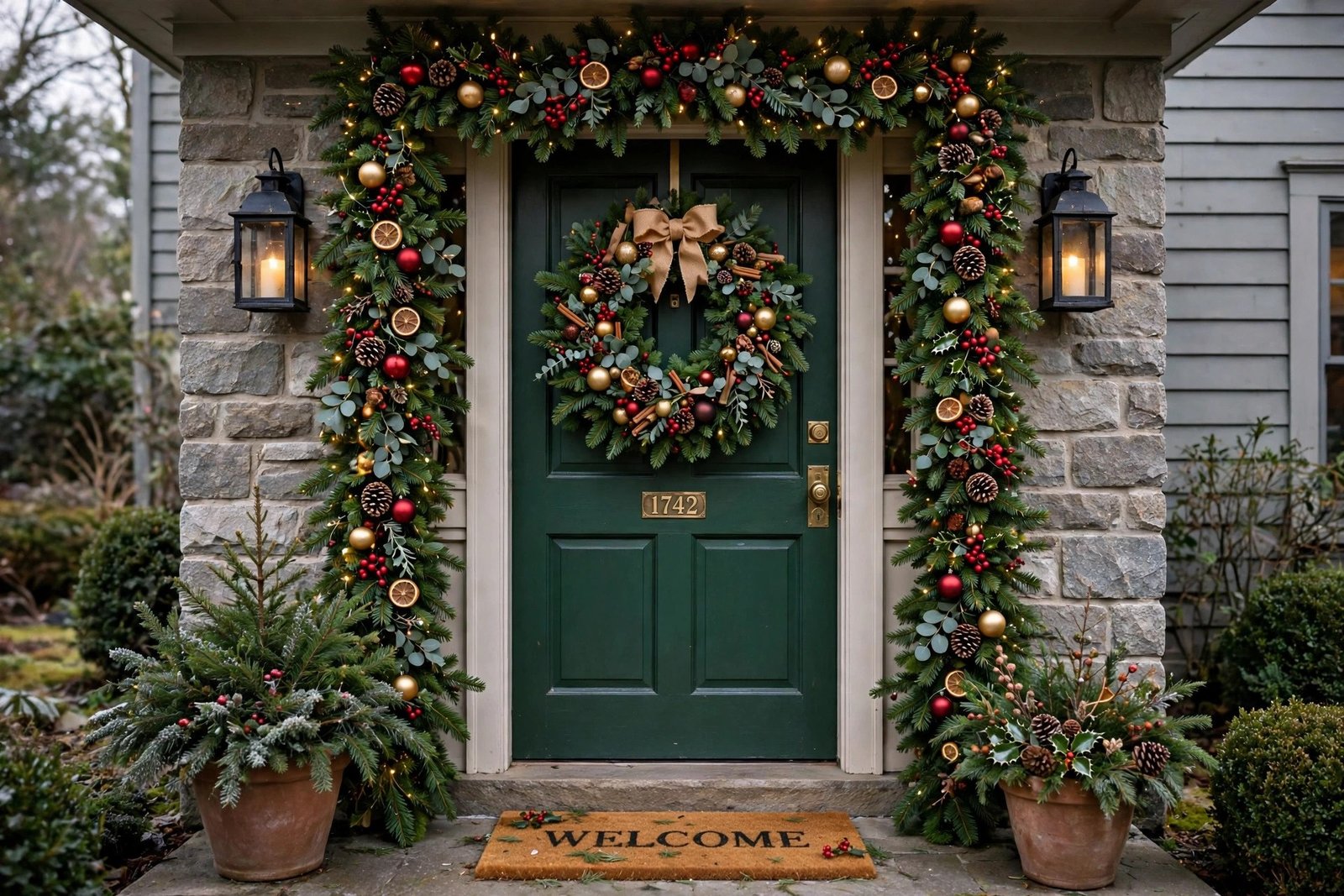
Beyond those two, garlands frame front doors and interior doorways, run along the top of kitchen cabinets and bookshelves, drape across mirrors and headboards, and edge a dining table as a runner. Entryways benefit most of all, since a garland around the door or along a console table carries the festive feeling straight into the hall, as in our Christmas hallway ideas guide.
Should You Choose a Real or Artificial Garland?
Real garlands, usually cedar, pine, or fir, smell wonderful and look naturally irregular in a way that reads as expensive. Their weakness is time: indoors, most start drying and dropping needles after two to three weeks, and they cannot be reused. Buy them as late as you can, mist them lightly, and keep them away from direct heat.
Artificial garlands have improved enormously. Good ones mix branch tips for a realistic look, come pre-lit, and last for many seasons, which makes their higher first cost the cheaper option over time. They are also the only sensible choice for early decorating and for homes with real fires, since they do not dry out. Many people now mix the two: an artificial base garland with a few real sprigs tucked in for scent and texture. If your tree is artificial and flocked, matching it with a flocked garland, like the tree styles in our flocked Christmas tree guide, keeps the room coherent.
How Much Garland Do You Need?
Measure the run, then add drape. For a mantel, the garland should be at least the mantel’s length, and one and a half times that length if you want it to swag in the middle and hang down the sides. For a staircase, measure along the rail and multiply by one and a half for a gentle swag, or by two for deep, dramatic swags between balusters.
Garlands are commonly sold in 6-foot and 9-foot lengths. Two shorter strands joined at the center of a mantel are easier to style than one very long strand, and the join hides easily behind a bow or a cluster of ornaments. Always buy a little more than your measurement: running short shows immediately, while extra length can simply drape further down the sides.
How Do You Hang a Garland Without Damaging Anything?
The method depends on the surface. On a mantel, removable adhesive hooks or stocking holders at each end and the center hold most garlands; heavy, fully decorated garlands may need small screws or picture hooks underneath the mantel shelf where holes never show. On a staircase, tie the garland to the banister with ribbon, floral wire, or clear zip ties every swag, and never rely on draping alone, since a pulled garland on stairs is a safety hazard.
Around doorways, use removable hooks above the frame or small nails in the frame’s top edge. On shelves and cabinets, the garland can simply rest in place with a few heavy ornaments as anchors. Whatever the surface, hang the plain garland first, check the drape from across the room, and only then add decorations, because adjusting a loaded garland is miserable work.
How Do You Style a Garland Like a Professional?
Fullness is the whole secret. Start by fluffing an artificial garland branch by branch, since a compressed strand always looks cheap. Then layer: a second, thinner garland or a strand of a different greenery twisted through the first instantly doubles the richness, which is the same layering idea behind the tree styling in our how to decorate a Christmas tree guide.
Work in this order: lights first, woven deep inside so the glow comes from within; then ribbon, either cascading in loops or wound loosely along the strand, a technique our Christmas tree ribbon garland guide explains in detail; then the large decorations spaced evenly; then smaller pieces and natural touches like pinecones, berries, and dried oranges filling the gaps. Decorate in odd-numbered clusters of three or five rather than evenly spaced singles, and step back often. Finally, buy garland and decorations together where possible: craft stores such as Michaels display coordinated garlands, ribbons, and picks in one aisle, which makes matching colors far easier than guessing online.
How Do You Store a Garland After Christmas?
Remove decorations first and store them separately. Coil an artificial garland loosely in a large storage bag or box without compressing it flat, and it will need far less fluffing next year. Take batteries out of battery-operated lights before storing, and note any dead bulbs on a label so next December starts smoothly. Real garlands go to compost or green waste; check local rules, since some areas collect them with Christmas trees for mulching.
Frequently Asked Questions
At minimum, the full length of the mantel. For a swagged look with the ends hanging down, choose one and a half to two times the mantel’s length. A 6-foot mantel typically needs a 9-foot garland.
Buy it as late as possible, mist it lightly every few days, and keep it away from heat sources and direct sun. Even with care, expect two to three good weeks indoors before it dries and starts dropping needles.
Yes, if it is tied securely to the banister with ribbon, floral wire, or zip ties at every swag, and kept clear of the handrail’s grip area and the steps themselves. Never leave a garland merely draped on stairs.
Fluff every branch, layer a second strand or different greenery through it, weave lights deep inside, and add decorations in clusters of three or five. Fullness and layering matter far more than the garland’s price.
Artificial garlands can go up from late November and stay fresh-looking all season. Real garlands are best hung in early to mid December so they are still green and fragrant at Christmas.
Yes. Use artificial garlands rated for outdoor use, or real greenery, which actually lasts longer in cold outdoor air than indoors. Secure outdoor garlands firmly against wind and keep plugs and battery packs sheltered from rain.

At Decor Artly, we bring art, home decor, and personal style together to create beautiful spaces and inspiring lifestyles. Led by Design Director Roni, we offer curated artwork, elegant home accents, and personalized styling to help you express your unique taste.