

Christmas inflatables are the fastest way to give a plain front yard a big finished holiday scene because one blower turns a flat piece of fabric into a glowing Santa, snowman or reindeer in minutes. The secret to a display that looks good all season is choosing the right size, anchoring every piece well and giving the fans safe steady power. This guide covers the popular types, setup, weather care, placement and storage so your yard stays cheerful instead of sagging after the first windy night.

Why Did Inflatables Become the Easiest Big Impact Yard Decor?
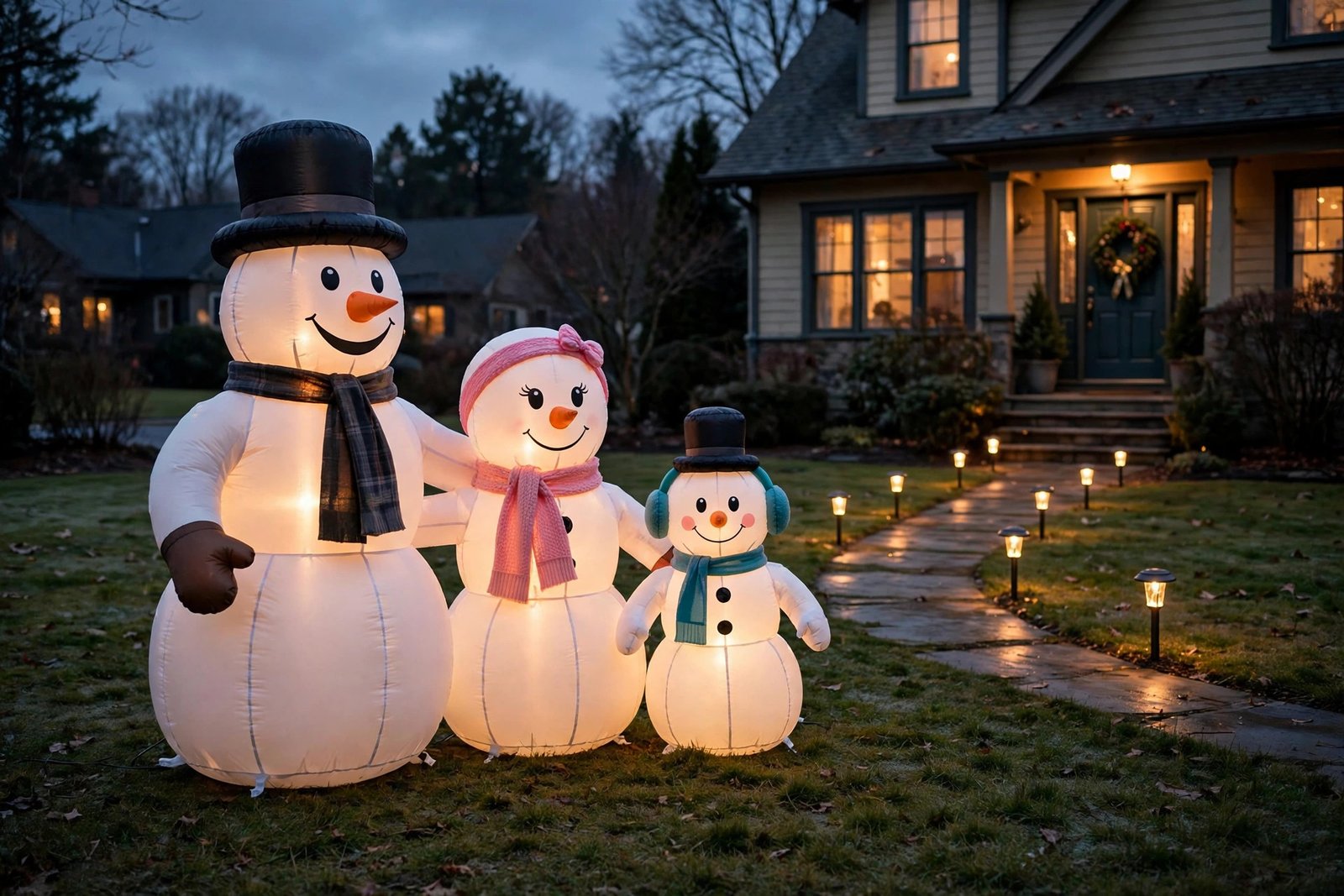
Inflatables grew popular because they solve the hardest part of outdoor decorating, which is scale. A tall Santa or a wide family of snowmen fills empty lawn space instantly, while the same scene built from wood, wire or individual figures would take far longer to arrange and store. Most pieces inflate in minutes, deflate into a surprisingly small bundle and come with built in lights that make them glow after dark. They suit everything from one cheerful snowman beside the door to a whole yard scene with the playful spirit of whimsy Christmas decor. For busy families, that mix of size, speed and easy storage is hard to beat.
What Types of Christmas Inflatables Can You Choose From?
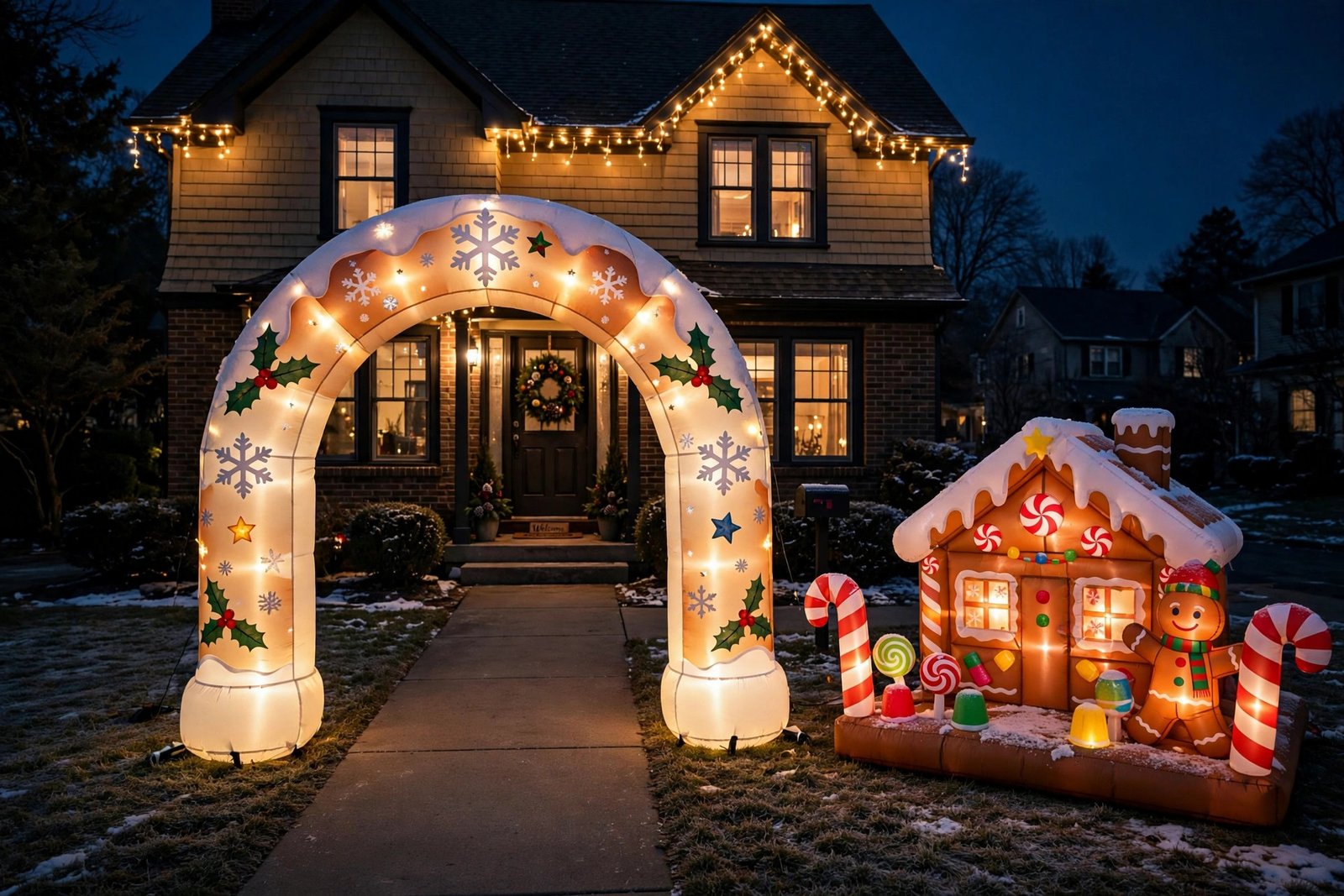
Start with the classics, because they read clearly from the street and mix with almost any house style. Santa figures range from a friendly waving Santa to full scenes with a sleigh and reindeer team. Snowman families are friendly for younger children, and reindeer work well in pairs near trees and shrubs. Arches and tunnels make a strong entrance over a walkway, while nativity scenes suit a quieter traditional display. Character inflatables bring favorite movie faces into the yard, although one strong character usually looks better than several competing themes. You can compare current styles and sizes at Home Depot before choosing a theme. Build the scene around one large piece, then add smaller figures only where the lawn still feels empty. If your outdoor space is a small balcony, scale the idea down with the compact inspiration in these balcony Christmas decorations instead.
How Do You Choose the Right Size for Your Yard?
Measure the open lawn first, then picture the inflated height and width rather than the headline size on the box. A six to eight foot figure suits most suburban front yards because it looks generous from the road without hiding the house. Very tall pieces belong on deep lawns where viewers stand far enough away to take in the whole shape. On a shallow yard, an oversized arch or Santa can loom over the walkway and block windows or doors. Small yards look best with one medium figure or a low wide scene, since horizontal pieces fill space without crowding the sky. Leave room around every inflatable for staking, tether lines and the blower fan, and check the view from inside so the display does not fill your front windows with fabric all season.
How Do You Set Up a Christmas Inflatable Step by Step?
Choose a dry day and a flat patch of lawn away from sharp sticks, sprinkler heads and rough stones. Unroll the inflatable fully and spread the fabric so no folds trap the fan or twist a limb out of shape. Close every zipper or vent left open for deflation, then attach the blower with its air intake facing open air rather than grass or a wall. Spread the base flat, connect the power and let the figure rise before anchoring, because staking a half inflated shape pulls it crooked. Once it stands, fasten the ground stakes through the base loops and tie the tether ropes to the upper loops, angling them outward like tent lines. Finish by checking the view from the street and clearing any fold that hides the face or lights.
How Do You Keep Inflatables Standing in Wind and Weather?
Wind is the true enemy, because a tall inflatable acts like a sail. Use every stake and tether point provided, and add extra stakes on the windward side if your yard catches gusts between houses. Sandbags at the base help on patios and other hard surfaces where stakes cannot go into soil. Keep tether lines snug but not strained, and recheck them after the first storm, since wet ground lets stakes creep loose. Rain alone rarely harms a quality inflatable, and running the fan in wet weather helps shed water. Snow is heavier, so brush off deep accumulation gently rather than letting it crush the shape. When strong winds, hail or a serious storm are forecast, switch off, deflate the piece and bring it under cover if you can. A night stored safely is cheaper than a torn seam or a burned out fan.
How Do You Run Power to Inflatables Safely?
Plan the power before placing the figures, because cord runs decide where everything can stand. Use only extension cords rated for outdoor use, and keep connections off wet ground on a brick, a cord cover or an outdoor connection box. One circuit can usually handle several inflatable fans and LED lights, yet repeated breaker trips mean it is overloaded. An outdoor timer is the easiest upgrade in the display, switching the scene on at dusk and off at bedtime so fans rest. Keep cords out of walkways, and never run them under doors or through pinch points. The fan runs constantly, so protect the blower from standing water and keep its intake clear of leaves. More guidance on lighting and layout lives among these outdoor Christmas decor ideas.
Where Should You Place Inflatables So They Look Good From the Street?
Think like a driver passing slowly at night. The main figure belongs where the whole shape is visible without a car, mailbox or shrub cutting through it, usually angled slightly toward the road rather than flat against the house. Group smaller pieces in odd numbers and at varied heights, tallest toward the back and lower characters forward, so the scene has depth. Leave breathing room between pieces, because a crowded lawn reads as a storage pile while a spaced scene reads as a story. Pathway lights can lead the eye to the main figure, and a lit tree indoors echoes the glow if you carry the theme through with a guide on how to decorate a Christmas tree. Keep cheerful characters near the entrance where arriving guests meet them up close.
How Do You Store Inflatables So They Last for Years?
Storage decides whether next season starts with joy or with a musty tangle. At takedown, choose a dry day, unplug the fan and let the inflatable deflate fully with its zippers open. Wipe off mud and grass with a soft damp cloth, then let the fabric air until every fold feels completely dry, because trapped moisture causes mildew smells and stains. Fold loosely along the natural seams instead of crushing the fabric into the smallest possible ball, and keep folds off the fan housing. Store the bundle in a breathable bin or the original bag in a cool dry place away from sharp tools and heavy boxes. Keep stakes, tethers and the cord in a small labeled pouch with the inflatable, so setup next season starts complete.
Frequently Asked Questions
Most home inflatables are built for evening display hours, and a timer giving them roughly six to eight hours a night suits most households. Daily rest keeps motors cooler, lowers electricity use and extends blower life.
Yes, within reason, because the fabric and fans are made for outdoor use and running the blower helps the shape shed rain. Brush off heavy snow so the weight does not crush seams, and always deflate and shelter inflatables during severe storms, hail or damaging winds.
Far less than most people expect. The small blower fan draws modest power and the built in LED lights draw very little, so a typical evening display costs only a small amount across the season. A timer lowers it further by preventing all night running.
Falling almost always traces back to anchoring, placement or airflow. Check for loose stakes, slack tethers, a twisted base, a partly open zipper or a blocked fan intake. Moving the figure out of a wind funnel between houses and adding stakes on the windy side usually cures repeat tipping.
For most front yards, a figure between six and eight feet tall gives a bold view from the street without hiding the house. Deep lawns can carry taller statement pieces, while small yards look better with one medium figure or a low scene that spreads wide instead of climbing high.
Clean the fabric, let every fold dry completely, then fold it loosely and store it in a breathable bin in a cool dry place. Keep the stakes, tethers and cord together in a labeled pouch, and avoid crushing the fan or storing heavy boxes on top of the bundle.

At Decor Artly, we bring art, home decor, and personal style together to create beautiful spaces and inspiring lifestyles. Led by Design Director Roni, we offer curated artwork, elegant home accents, and personalized styling to help you express your unique taste.