

Christmas paper chains are back on trees, mantels and staircases this year because they bring the handmade, nostalgic feeling that store bought garlands cannot copy, and they cost almost nothing to make. All you need is paper, a cutting tool and something sticky, and an afternoon of looping strips turns into yards of soft, cheerful garland. This guide covers the best papers, a simple step by step method, color combinations that look designed rather than random, and the best places to hang your chains so the whole house feels pulled together.

Why Are Christmas Paper Chains Trending Again?
Paper chains are riding the same wave as the rest of the handmade Christmas revival, where homes look collected and personal instead of decorated from one store shelf. They carry real nostalgia, because many people remember making them at a kitchen table as children, and that memory is exactly the mood this season’s decorating is chasing. They also fit the playful, colorful spirit of whimsy Christmas decor. Add the low cost, the plastic free materials and the fact that children can genuinely help, and the trend explains itself. A chain costs pennies per foot, so you can decorate a whole staircase for less than one bought garland.
What Paper Works Best for Christmas Paper Chains?
The paper decides how your chains look and how long they last. Classic construction paper is the easiest starting point because it is cheap, matte and forgiving, and it comes in every Christmas color. Scrapbook paper and cardstock hold a crisper loop and richer color, which suits a more polished tree. Old book pages, sheet music and brown kraft paper give a vintage, storybook feel that pairs beautifully with vintage Christmas decorations. Wrapping paper works too, although thin glossy rolls tear more easily and curl at the edges. Whatever you choose, keep the weight consistent along one chain, because mixing thick card with tissue thin paper makes loops sag unevenly. You can compare paper weights and holiday craft packs at Michaels before you start. For a first project, one pack of double sided scrapbook paper in three colors is the sweet spot.
How Do You Make a Christmas Paper Chain Step by Step?
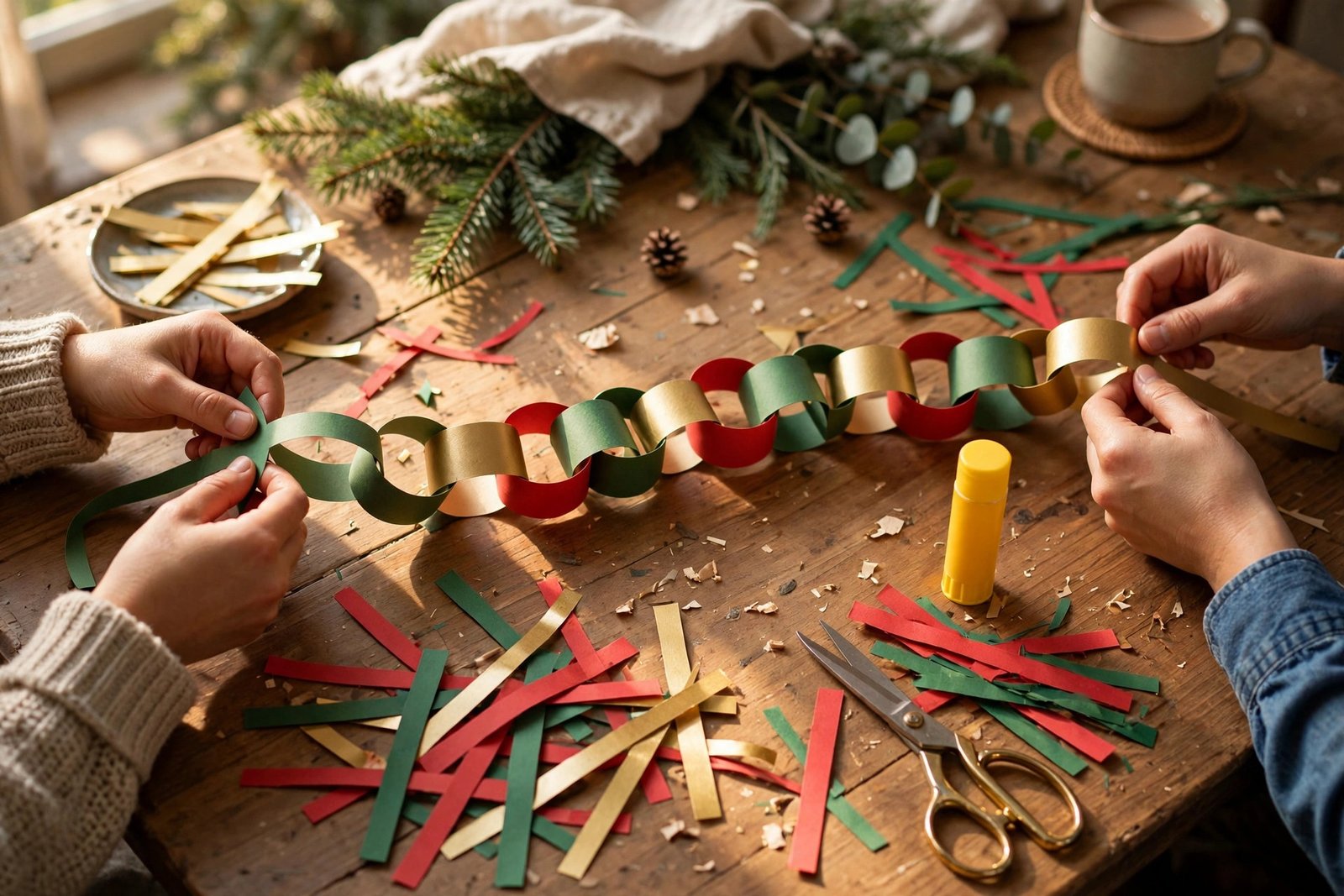
The method has not changed in a hundred years, which is why it works for every age. First, cut your paper into strips about one inch wide and eight to nine inches long, keeping the width even so the loops match. Second, form the first strip into a ring and secure the overlap with a glue stick, tape or a stapler. Third, thread the next strip through the ring before closing it, and keep alternating colors in your chosen pattern. Work in sections of ten to fifteen links on the table, then join the sections together, because long chains tangle and tear when dragged around. A paper trimmer or a rotary cutter makes cutting far faster and straighter than scissors, and pre cutting all strips before anyone starts gluing keeps children happily busy instead of waiting. Aim for gentle tension when you close each loop, since yanking thin paper tight is what splits it.
What Color Combinations Look Best for Paper Chains?
A chain reads as designed when it follows a pattern instead of using every paper you own. The classic rhythm is red, green and cream repeated, which suits almost any room. Kraft brown, cream and deep red gives a calm Scandinavian feel that sits well beside natural wood. Blush pink, burgundy and gold leans romantic and photographs beautifully in soft light. For a playful family room, rainbow brights in a repeating order look joyful rather than chaotic, as long as the order never breaks. Metallic gold or silver paper mixed every fourth or fifth link adds sparkle that catches tree lights at night. Keep to three or four papers per chain, repeat the sequence strictly, and make all your chains for one room from the same set so the tree, mantel and doorway feel like one scheme. If you are building other handmade pieces this season, the same color discipline runs through these DIY Christmas decorations too.
Where Can You Hang Paper Chains Around the House?
The tree is the obvious home, and chains look best there looped loosely in swags rather than wound tightly around the branches, following the same layering logic as a guide on how to decorate a Christmas tree. A mantel takes a chain beautifully across its front edge, especially with stockings hung below it. Staircase banisters are the classic hallway spot, with the chain draped in gentle dips between the newel posts. Windows and door frames gain instant cheer from a single chain pinned at the corners, and a child’s bedroom door is the perfect place for the chain they made themselves. Short chains also work as a table runner down the middle of a dining table, or looped around a wreath for a handmade front door. Keep paper chains away from open flames, candles and hot radiators, and hang them high enough that pets cannot pull them down.

How Do You Make Paper Chains With Kids Safely?
Paper chains are one of the few decorations children can make almost entirely themselves, which is exactly why families love them. Give younger children pre cut strips so the only tool they handle is a glue stick, and let older children measure and cut with safety scissors at the table. A glue stick is the safest fastener for small hands, while staplers should stay an adult job. Settle the color pattern together before starting, because mid chain arguments about the next color are the traditional part of the project. Short working sessions suit small attention spans, so make one section per child and join them into a single family chain at the end. Write each child’s name and the year in tiny letters on their first loop, and years later that chain becomes the decoration everyone looks for first.
How Do You Store Paper Chains So They Last?
Paper is fragile, so storage decides whether your chains return next year or arrive as a crushed mat. Never fold or compress them into a tight box, because every loop flattens and the glue joints crack. Instead, lay chains in long, loose coils inside a large box or storage bin, with tissue paper between layers if you stack more than one. Keep the box somewhere dry and away from attic heat, since damp softens glue and fades colors fastest. Chains made from cardstock and scrapbook paper survive several seasons stored this way, while thin construction paper chains are best treated as a joyful one season project. Take one photo of where each chain hung this year, and next December the whole scheme goes back up in minutes.
Frequently Asked Questions
It depends on where it hangs. A standard tree takes roughly ten to fifteen feet of chain draped in swags, a mantel needs about six to eight feet, and a staircase banister usually takes twelve feet or more. Measure the spot, then add a little extra for the dips.
A glue stick is the easiest and safest choice, especially with children, and it holds light paper well. For cardstock chains, a small dot of craft glue or double sided tape gives a stronger hold. Staples are fastest of all but show on the finished chain.
About one inch wide and eight to nine inches long is the classic size, giving soft round loops that hang well. Wider strips around one and a half inches make chunkier, bolder chains that suit staircases and large trees, while narrower strips look delicate on small trees.
Yes, although thin wrapping paper tears more easily and the glossy surface resists glue sticks. Matte wrapping paper and heavier gift wrap work best, and tape or staples hold the loops more reliably than glue on shiny paper.
Modern LED lights run cool and are generally fine near paper, but keep chains from resting directly on bulbs and never use paper chains near candles, fireplaces or old hot running lights. Hanging chains slightly away from direct heat is the simple rule.
One standard sheet cut into strips gives roughly ten to twelve links, which is about three feet of finished chain. A twelve foot chain therefore takes around four sheets, so a single paper pack covers a tree with plenty to spare.

At Decor Artly, we bring art, home decor, and personal style together to create beautiful spaces and inspiring lifestyles. Led by Design Director Roni, we offer curated artwork, elegant home accents, and personalized styling to help you express your unique taste.
Pingback: Advent Calendar DIY