
Wall Art Ideas for Rental Apartment Living: Damage-Free Ways to Decorate
Blank walls make a rental feel temporary, but drilling holes can feel risky when your deposit is on the line. The good news is that wall art ideas for rental apartment spaces have improved a lot. You can build a layered, personal look using adhesive strips, leaning frames, tension systems and fabric, then take it all down at move-out without a trace.
This guide is for renters who want results without arguments with a landlord. You’ll learn which hanging methods work, how to match art to each room, how to avoid common mistakes, and when to skip adhesives entirely.
Quick Answer
The best wall art ideas for rental apartment walls are leaning large frames on dressers or floors, using adhesive strips for lightweight prints, hanging fabric or tapestries with removable hooks, and building a gallery wall on a picture ledge. Always check your lease first and follow the weight limits printed on any adhesive product.
Check Your Lease Before You Hang Anything
Leases differ. Some allow small nail holes, some ban any wall alterations, and some require written permission. Rules about deposit deductions also vary by location. In many places, minor wear is treated differently from actual damage, but you shouldn’t assume that applies to you.
A practical habit: read the lease clause on “alterations” or “wall damage,” and if it’s unclear, email your landlord a short question. A written yes is worth more than a verbal one. Take dated photos of your walls at move-in so you can show their original condition later.
Also note the wall surface. Fresh paint, textured plaster, wallpaper, brick and tile all behave differently with adhesives. Most failures happen because the surface was wrong, not because the product was bad.
Hanging Methods That Protect Your Deposit
Here is how the main options compare.
| Method | Best for | Main risk |
|---|---|---|
| Adhesive strips | Light frames, prints | Peeling paint if rushed or removed wrongly |
| Leaning | Large, heavy art | Frames sliding or tipping |
| Picture ledge | Gallery layouts | Needs a few small fixings or heavy-duty adhesive |
| Tension rods/rails | Hanging multiple pieces | Surface slip if poorly placed |
| Small nail | Medium frames | Needs landlord approval |
Adhesive Strips and Hooks
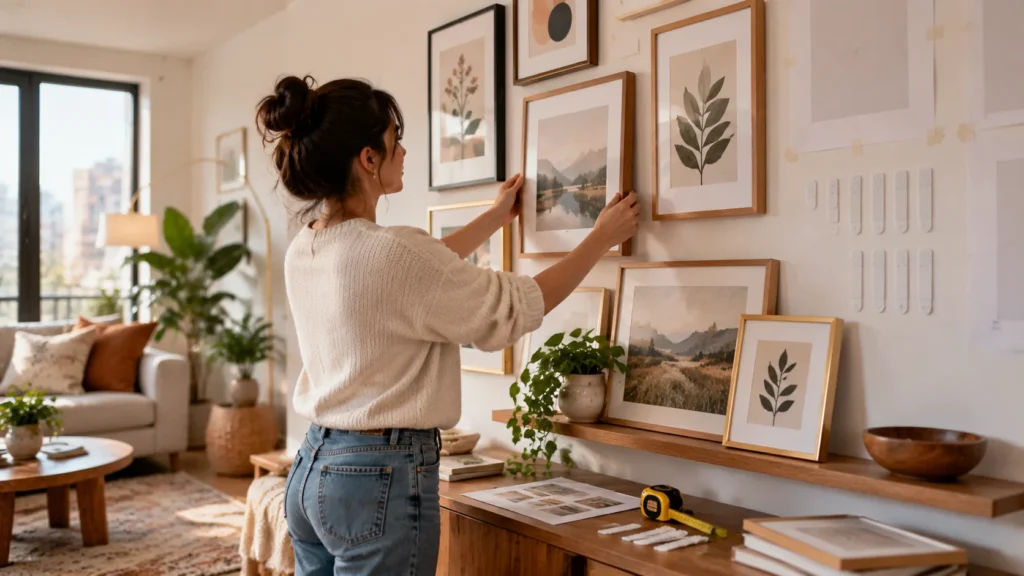
These are the default choice for most renters. Clean the wall with a dry or lightly damp cloth, let it dry fully, press the strip firmly for the time the instructions state, and wait before hanging the frame. Rushing the wait is the most common reason strips fail.
For removal, pull the tab slowly and parallel to the wall rather than outward. Pulling straight out is how paint gets peeled off.
Leaning Art on Surfaces
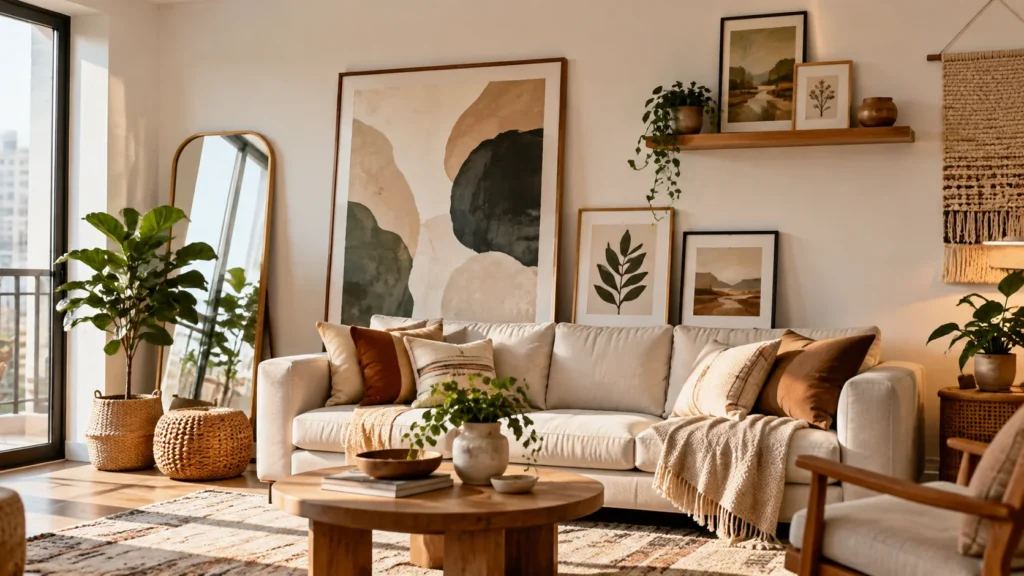
Leaning is the easiest of all wall art ideas for rental apartment budgets, because it involves no adhesive at all. Place a large frame on a dresser, console, bookshelf or the floor and angle it slightly against the wall. Overlap smaller frames in front for depth. Add a small piece of museum putty or a rubber foot under the frame so it doesn’t slide.
Picture Rails and Tension Systems
If your apartment already has a picture rail, use it. Hooks and cords hang from the rail with no wall contact. If it doesn’t, a tension pole or rod fitted between floor and ceiling can hold lightweight hanging displays. Check its weight limit before loading it.
Small Nail Holes
A thin nail leaves a very small hole that is often easy to fill, but only do this if your lease allows it. If you do, put the nail into a stud or use proper wall anchors for heavier pieces, and keep a small tub of spackle for move-out.
Wall Art Ideas for Rental Apartment Rooms
Different rooms need different approaches. Humidity, foot traffic and sightlines matter.
Living Room
The living room usually has the biggest blank wall, so scale matters most. One oversized leaning piece behind a sofa or console often looks better than many small frames. If you prefer a gallery layout, cluster frames in odd numbers and keep consistent spacing of a few centimeters or inches.
A reliable approach: lean one anchor piece, then add two or three lighter frames on adhesive strips at eye level around it. Eye level generally means the center of the artwork sits at about 57 inches (145 cm) from the floor, which is common gallery practice.
Bedroom
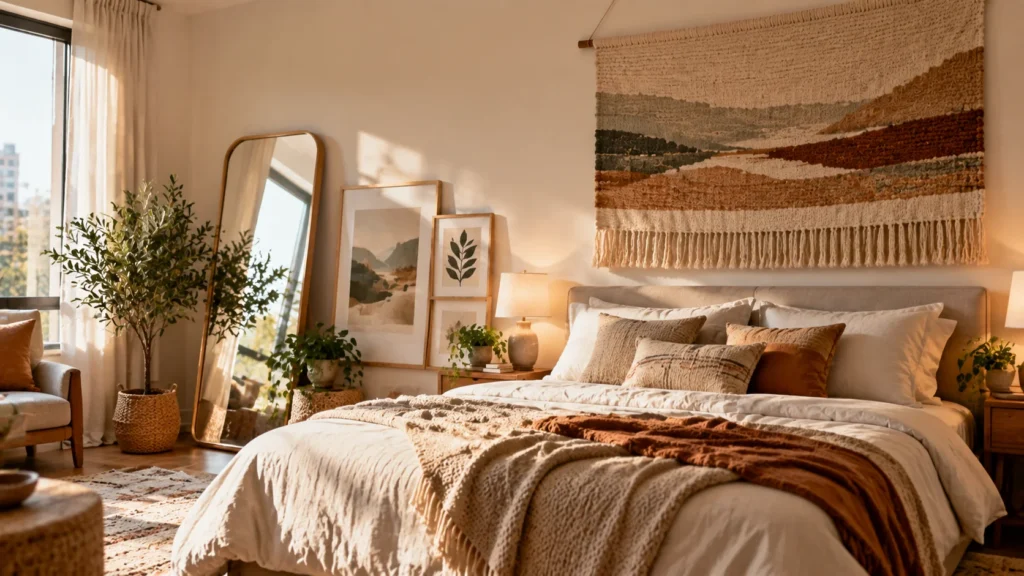
Bedrooms suit softer, calmer pieces. Hang a tapestry or woven wall hanging above the bed with removable hooks, or lean a tall mirror and layer prints beside it. Avoid heavy frames directly over the bed unless you are certain of the fixing.
Kitchen and Dining Area
Steam and grease weaken adhesives. Choose framed prints with glass and keep them away from the stove. Use a picture ledge or lean art on open shelves. Metal signs, small cutting boards and plates also work as decor and are easy to remove.
Wall Art Ideas for Rental Apartment Entryways and Hallways
Narrow spaces need slim pieces. Use a shallow picture ledge, a row of small matching frames, or a single tall mirror with a small shelf. Because hallways get bumped often, avoid anything protruding and make sure each strip is pressed securely.
Non-Traditional Art Types Renters Overlook
Framed prints are not the only option. These are easier to remove or require little fixing:
- Fabric and tapestries: Hang with removable hooks or a slim rod. Linen or cotton pieces soften echo in empty rooms.
- Removable wallpaper: Use on one accent wall or inside a bookcase back panel. Test a small patch first, especially on textured paint.
- Washi tape designs: Create geometric shapes or frames-within-frames. It is cheap and easily changed.
- Mirrors: Lean large mirrors to bounce light and add depth.
- Plants and shelves: Living plants in hanging pots (from a ceiling hook only if permitted) bring color without frames.
- Canvas on easel: A tabletop easel gives you display without any wall contact.
Gallery Wall Layouts That Work Without Drilling
A common mistake is hanging each frame separately and hoping it looks good. Instead, lay all frames on the floor first, arrange them, then photograph the layout. Cut paper templates the size of each frame and stick them to the wall with painter’s tape to test spacing.
Good rules of thumb:
- Keep gaps consistent (a few centimeters or inches).
- Anchor with the largest piece first.
- Mix frame sizes but keep a consistent color or frame finish.
- Leave space to the edges of furniture below.
Picture ledges make rearranging easy, which is useful if you move often.
Budget Breakdown
Price depends on how many items you buy and where. As a general planning guide:
- Very low cost: Printable art, thrifted frames, washi tape, fabric you already own.
- Mid-range: Matching frames, picture ledges, a large leaning mirror.
- Higher cost: Original art, custom framing, large statement pieces.
For most renters the smartest budget wall art ideas for rental apartment living are one or two large pieces rather than many small ones, because large scale reads as intentional. Secondhand shops, community marketplaces and free printable collections are good starting points.
Common Mistakes
- Skipping surface prep. Dust or grease stops adhesive from bonding.
- Overloading strips. Always check the weight rating and use more strips than you think you need, within the product instructions.
- Ignoring humidity. Bathrooms and kitchens weaken many adhesives.
- Hanging too high. Art placed too high looks disconnected from furniture.
- Pulling strips straight out. This is the most common cause of peeled paint.
- Forgetting the lease. Even adhesives can cause problems on some surfaces, so confirm what’s allowed.
- Buying frames before measuring. Measure the wall and furniture first.
Expert Tips and When Not to Use Adhesives
A few practical habits make a big difference:
- Test strips in an inconspicuous corner and leave them for a few days before committing.
- Keep a small tub of spackle and a putty knife for move-out.
- Mix heights and orientations for a more collected look.
- Use warm LED picture lights or a clip lamp to make simple art feel more expensive.
- Keep the original packaging or take notes about the product used.
When not to use adhesives: skip them on freshly painted walls (many paints need weeks to cure), crumbly plaster, wallpaper, heavily textured walls, damp surfaces and very heavy pieces. In those cases, lean the art, use a picture rail, or ask your landlord about a fixing.
FAQs
Use adhesive strips rated for the weight, lean pieces on furniture, or hang from picture rails. Clean the surface, follow the product instructions, and remove strips by pulling the tab slowly parallel to the wall.
Usually, if used on cured, smooth paint and removed correctly. They can lift paint on fresh, poor-quality or textured finishes, so test a small area first.
Leaning large frames, tapestries on removable hooks, picture ledges, mirrors, washi tape designs and removable wallpaper all work without drilling.
Only if your lease allows it. Rules on small holes differ by lease and location, so get written permission if you’re unsure.
Lean one oversized frame or mirror, hang a large fabric piece, or build a gallery wall with thrifted frames spray-painted to match.
A common guideline is to center the artwork at about 57 inches (145 cm) from the floor, then adjust for furniture and ceiling height.
Fabric, woven hangings, plates, small shelves, mirrors, painted canvases and washi tape shapes all work.
Stretch the adhesive tab slowly and parallel to the wall. If it resists, warm it gently with a hair dryer on low heat to soften the adhesive, then continue.
Final Takeaway
The best wall art ideas for rental apartment living balance style with reversibility. Start with your lease, choose a hanging method that suits your wall surface, and build the look in layers: one large anchor piece, a few lighter frames, and some texture from fabric or mirrors. Your next step is simple: pick one blank wall, measure it, and test a single adhesive strip in a corner today.

At Decor Artly, we bring art, home decor, and personal style together to create beautiful spaces and inspiring lifestyles. Led by Design Director Roni, we offer curated artwork, elegant home accents, and personalized styling to help you express your unique taste.